
 Written by
 Dollar Falls, Gold Rises, Global Trade Moves to China and India
The US dollar, long the backbone of the global financial system, faces sustained pressure in early 2026, a trend reflecting Dollar Debasement. Trading near multi-year lows against major currencies, its decline signals more than inflation or interest-rate expectations. It represents a fundamental shift in global trade, capital flows, and geopolitical alignment, as governments, corporations, and investors increasingly turn to gold and strengthen economic ties with China and India.
This shift does not mean the dollar is collapsing, but it shows that its uncontested dominance is fading.
Dollar Debasement: Gold’s Record Highs Reflect Dollar Stress
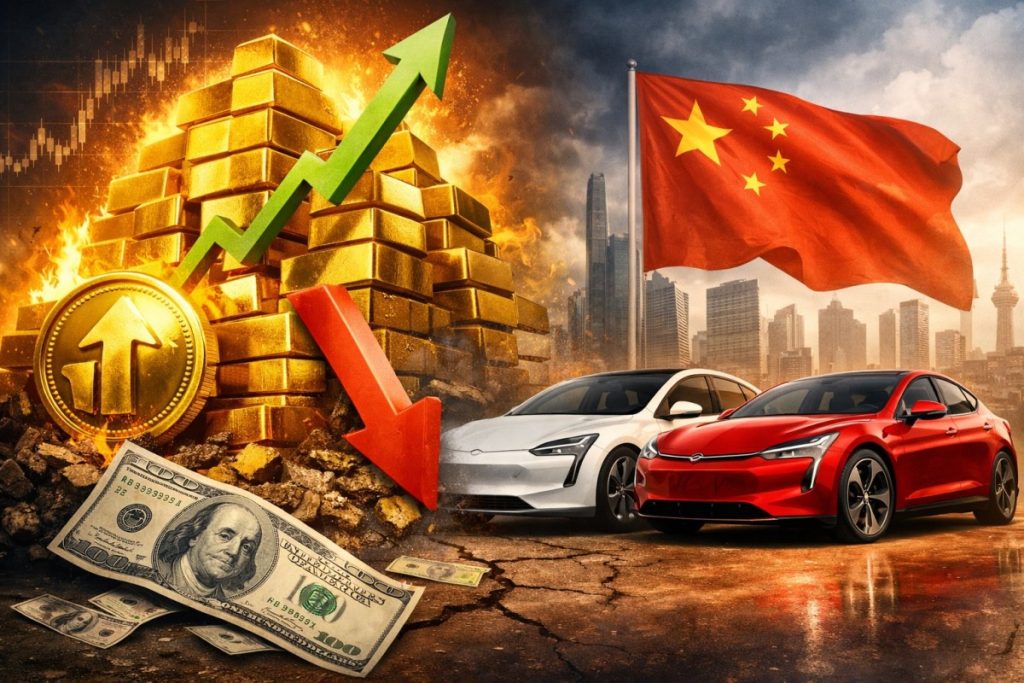
As the dollar weakens, gold has surged to record highs. This rally is no accident. Gold remains a reliable hedge against currency instability, and its rise reflects growing concern about long-term reliance on the US dollar.
Central banks actively drive this trend. Across Asia, the Middle East, and emerging markets, governments are boosting gold reserves to reduce exposure to dollar-denominated assets. Unlike US Treasuries, gold carries no sanctions risk, no counterparty exposure, and no political leverage.
Gold’s strength signals one clear message: confidence in the dollar-centric system is being reassessed.
Dollar Debasement: Dollar Weakness Is Structural, Not Cyclical
In past cycles, dollar weakness often proved temporary. Today, structural forces dominate. The US faces record government debt, persistent fiscal deficits, and rising interest obligations, which limit long-term policy flexibility.
The dollar now functions as a geopolitical instrument. Sanctions, asset freezes, and payment restrictions have altered how countries evaluate financial risk. Overreliance on the dollar has become a strategic vulnerability rather than a source of stability. Diversifying away from the dollar has evolved from ideology into a practical necessity.
Dollar Debasement: Europe Rebalances Trade, Energy, and Currency Exposure
Europe remains politically aligned with the US, but it recalibrates economically. The European Union maintains extensive trade with China and restructures supply chains in manufacturing, clean energy, and transportation.
European firms increasingly settle trade in euros and yuan instead of dollars, especially for industrial goods, raw materials, and long-term contracts. Energy diversification accelerates this shift, as Europe seeks reliable partners outside traditional dollar-heavy routes.
These adjustments happen quietly but steadily reduce structural demand for the dollar.
Dollar Debasement: Chinese Automotive Expansion in Europe and Canada
China’s growing influence shows clearly in its automotive sector. Chinese EV and battery manufacturers are entering Europe and Canada through direct sales, partnerships, and local manufacturing investments.
In Europe, they gain market share by offering competitive pricing, integrated supply chains, and advanced battery technology. In Canada, they invest in EV production and critical minerals infrastructure.
This expansion reshapes trade flows, supply chains, and capital investment. As Chinese firms localize production, transactions increasingly bypass traditional US-dollar frameworks, weakening dollar dominance in global manufacturing.
Dollar Debasement: Canada’s Energy Deals Reflect Broader Realignment
Canada is adjusting its trade strategy as well. Oil and energy agreements with India and Europe diversify its energy exports. India’s growing energy demand makes it a long-term partner for Canadian producers, while Europe seeks stable, non-Russian energy supplies.
These deals reduce dependence on a single market and support a more resilient trade structure. Even when contracts reference the dollar, the strategic direction clearly points toward diversification.

Dollar Debasement: China and India Reshape Global Growth
China expands currency influence through trade agreements, infrastructure financing, and bilateral currency swaps. Energy and commodity trades across Asia, Africa, and the Middle East increasingly bypass the dollar.
India strengthens this shift as a neutral economic power with strong ties to both Western and Global South markets. It attracts capital into manufacturing, infrastructure, and technology. Rupee-based trade in energy and defense reduces dollar dependence across regional corridors.
Global investors respond by reallocating capital toward India and China-linked supply chains rather than focusing solely on US assets.
A Multipolar Financial System Emerges
Dollar weakness, record gold prices, Chinese industrial expansion, diversified energy trade, and India’s rise combine to create a multipolar global financial system. The dollar remains important but no longer dominates.
Gold, the euro, the yuan, and regional currencies gain influence. Expected US interest-rate cuts in 2026 further reduce the dollar’s yield advantage, reinforcing diversification trends.
How Dollar Weakness, Gold Strength, and Global Realignment Will Affect the US Stock Market
The decline of the US dollar, surging gold prices, and the shift toward China and India will have uneven effects on the US stock market. Some sectors will benefit, others will face pressure. The era of broad, effortless US equity outperformance is ending, and investors must prioritize selectivity over passive exposure.
Multinationals Gain Short-Term Relief but Face Long-Term Pressure
A weaker dollar initially helps US multinationals. Companies with overseas revenue benefit when foreign earnings convert back into dollars, boosting near-term earnings for mega-cap tech, consumer brands, and industrial exporters.
However, this advantage is temporary. Rising trade ties between Europe, Canada, and China and India create new competition in EVs, industrial equipment, batteries, and clean energy. Chinese automotive expansion directly challenges US automakers and suppliers. Over time, market share loss matters more than currency translation gains.
Pressure on US Manufacturing and Autos
US manufacturing stocks face structural headwinds. Chinese firms now export finished, high-tech products, particularly EVs and batteries. As they expand production in Europe and Canada, US manufacturers risk losing growth markets. Automakers, parts suppliers, and legacy industrials may struggle unless they compete on cost, scale, and supply-chain efficiency. Investors should expect margin pressure, not just cyclical volatility.
Tech Stocks Face More Competition
US tech companies remain dominant, but global competition intensifies. India’s rise as a manufacturing and software hub, combined with China’s advances in hardware, AI, EVs, and batteries, introduces new rivals. Capital that once flowed automatically into US tech now redirects toward Indian and Asian markets. While this does not signal a tech crash, it implies lower multiples and higher expectations for profitability over growth narratives.
Commodities, Energy, and Defense Stocks Benefit
Dollar weakness and global fragmentation favor hard-asset sectors. Commodity producers, gold miners, and energy companies benefit from higher prices and diversified demand. Canada’s energy deals with India and Europe, combined with rising global defense spending, support US energy infrastructure firms, LNG exporters, and defense contractors. Capital rotation, not uniform gains, will define these markets.
Financials and Treasuries Face Challenges
Banks and institutions tied heavily to US Treasuries may face headwinds as global demand declines. Reduced foreign participation increases yield and borrowing pressures. High-yield growth stocks and leveraged firms may struggle, while companies with strong cash flows and balance sheets gain advantage.
Index Investing Becomes Riskier
For years, buying the S&P 500 meant riding US exceptionalism. Now, capital diversifies globally, and dollar dominance declines. Passive index investing carries higher concentration risk, especially in mega-cap tech. Active positioning by sector, geography, and balance-sheet quality becomes essential.
US-Iran Tensions and the Strait of Hormuz: Implications for Oil Prices
Rising geopolitical tension adds a new layer of market volatility. The deployment of a substantial American naval fleet toward Iran raises fears of confrontation over Tehran’s nuclear ambitions. The Strait of Hormuz, a crucial chokepoint for nearly a fifth of global oil shipments, sits at the center of these concerns. Any disruption in this narrow waterway could tighten global oil supply significantly, pushing prices higher and increasing market volatility. Investors now watch oil and gas stocks closely, while defense companies may see heightened demand. Beyond traditional hedges like gold and silver, energy and defense sectors are becoming critical components in portfolios navigating geopolitical risk.
The New Hedge Era and Strategic Investment Opportunities
The US stock market will not collapse, but leadership is shifting. Dollar weakness, gold strength, and global realignment favor select sectors over broad indices. Investors now prioritize strategic positioning, global diversification, and protection against currency and geopolitical risks.
Gold and silver continue to provide stability rooted in history, while Bitcoin emerges as a digital hedge — scarce, borderless, and independent of central banks. Together, they reflect a broader trend: as trust in traditional monetary structures erodes, capital moves toward assets outside government control.
In this environment, investors should focus on hard assets, energy, and defense stocks, particularly those benefiting from geopolitical tension and rising commodity prices. Companies like Chevron, Exxon Mobil, ConocoPhillips, and EOG Resources may benefit if oil prices spike due to supply disruptions. Defense firms like Lockheed Martin and Raytheon Technologies may see increased demand. Tech firms leading in AI, EVs, clean energy, and advanced manufacturing remain attractive if they maintain global competitiveness. Investors should also consider emerging market exposure in India and China, where growth opportunities in EVs, batteries, infrastructure, and technology can diversify risk while capturing new upside.