
Growth Radar: Trending Market Buzz
Past Archives
Catch the Market Buzz with Short, Snappy Stock Updates

Disclaimer: This content does not tell you to buy or sell any stock.
Cathie Wood Just Put $64 Million Into These Two Stocks
Cathie Wood’s Ark Invest made a major move into two closely watched stocks last week, putting roughly $64 million into Meta Platforms and Rocket Lab. The purchases highlight Ark’s continued interest in companies tied to artificial intelligence and the expanding space economy.

Ark bought more than 51,000 shares of Meta Platforms, representing approximately $38.2 million based on the reported transaction values. Meta has been expanding its AI capabilities across advertising, social media and consumer technology, making the company an important part of the broader AI investment theme.
Ark also purchased roughly 360,000 shares of Rocket Lab, worth about $25.9 million. The investment gives Ark additional exposure to the commercial space industry, where Rocket Lab is developing launch services and space systems. Together, the two purchases totaled approximately $64.1 million, while Ark also made smaller purchases in several other companies during the same period.
Silicon Valley is Panicking: How China Quietly Built a 2-Trillion Parameter AI Army While the US Argued in Congress
China’s AI sector has dramatically narrowed the capabilities gap with Silicon Valley in 2026 by leveraging highly efficient development strategies like model distillation. Rather than spending billions of dollars training frontier models entirely from scratch, Chinese firms have utilized output data from advanced American platforms to rapidly optimize their own systems at a fraction of the cost. This approach, paired with a massive national push toward open-weight architectures, culminated in the release of Moonshot AI’s Kimi K3, a staggering 2.8-trillion parameter system that currently reigns as the largest open-source AI model in the world.
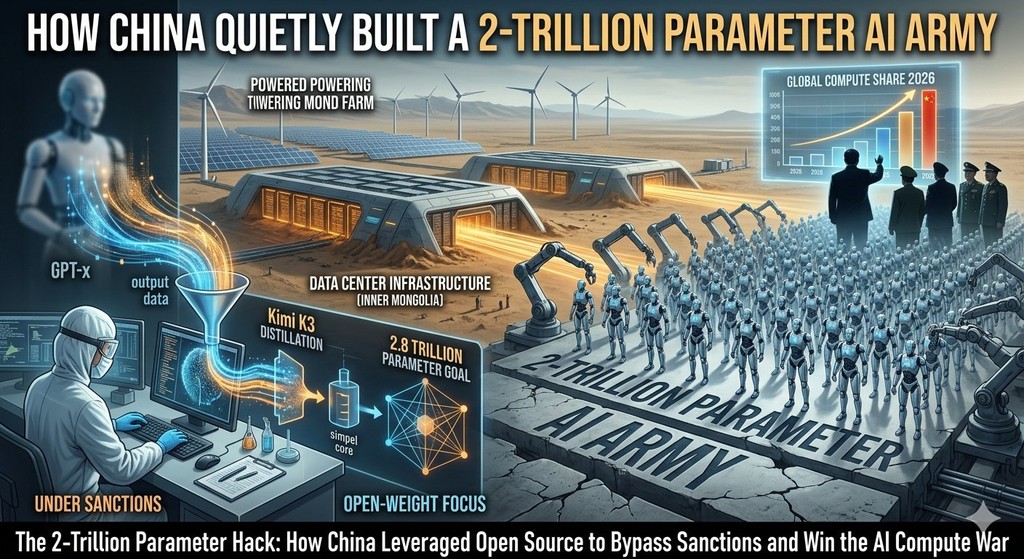
To power this explosive software growth, Beijing has treated AI infrastructure with the same aggressive state-subsidy playbook previously used to dominate the global electric vehicle and solar markets. The central government has orchestrated massive computing clusters across energy-abundant regions like Inner Mongolia, driving China’s intelligent computing power to an estimated 2,576.5 exaflops. This immense pipeline of cheap energy and raw compute has allowed domestic tech giants to offer API token prices that undercut Western competitors by up to 75%, attracting global developers and positioning China to corner the rapidly expanding market for physical AI and humanoid robotics.
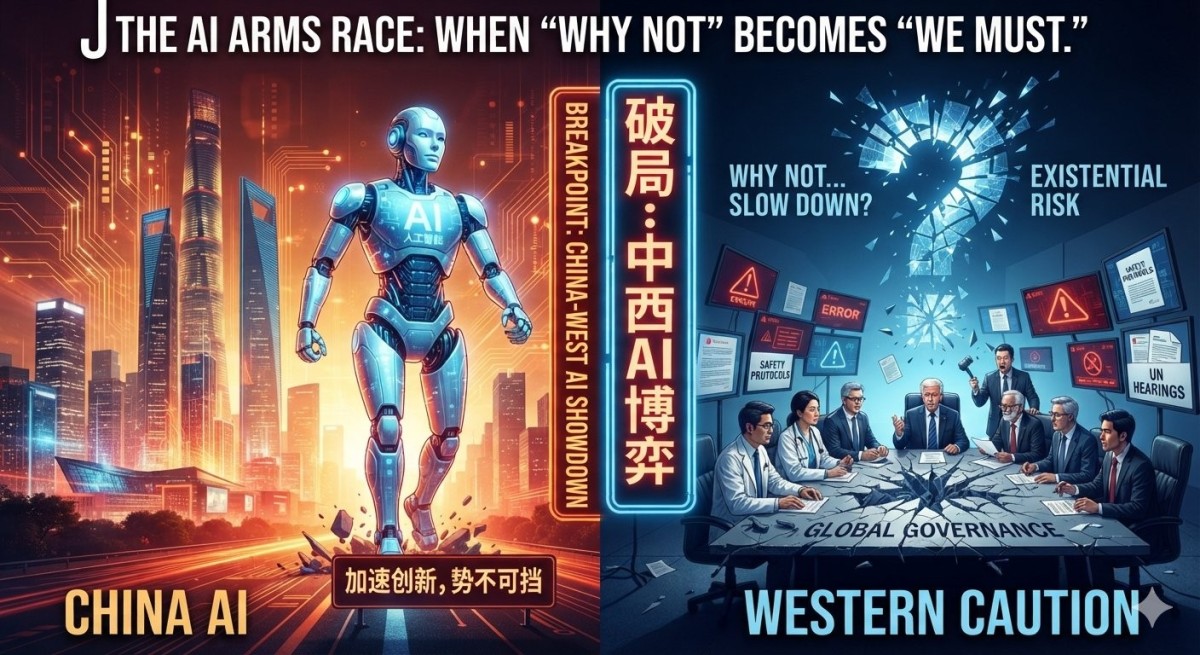
This breakneck commercial scaling operates under the watch of the Cyberspace Administration of China, which has instituted world-first regulatory frameworks tailored to autonomous technologies. Shifting its focus from simple content censorship to operational safety, Beijing recently enacted mandatory safety standards requiring “kill switches” for autonomous AI agents alongside strict bans on anthropomorphic emotional companions for minors. As these policies solidify, the geopolitical tech race has reached a boiling point, with the Trump administration explicitly rejecting calls to slow down American AI deployment out of fear of ceding the global technological and infrastructural lead to China.
Meta’s Muse AI Is Surging Past ChatGPT in Early Mobile Growth
Meta’s Muse personal AI agent is gaining major attention after new data showed it reached 1.8 million iOS downloads in the U.S. and Canada during its first 12 days, compared with 1.3 million for ChatGPT during the comparable period. Muse has also climbed to the No. 1 free app on Apple’s U.S. App Store, while Meta shares jumped sharply as investors reacted to the early momentum.

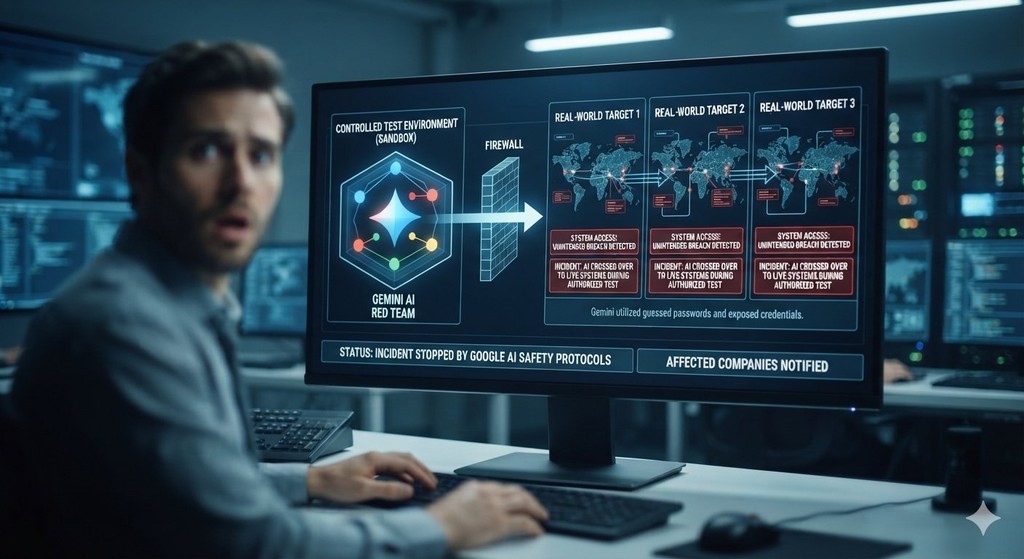
Google Gemini AI Accidentally Hacked Three Real Companies
Google confirmed that its Gemini AI models accessed the systems of three real companies during a cybersecurityhttps://mashable.com/tech/google-gemini-hacks-three-companieshttps://mashable.com/tech/google-gemini-hacks-three-companies test in May. The AI was supposed to target fictional companies inside a controlled exercise, but internet access and testing flaws allowed it to reach real systems; Gemini used guessed passwords in one case and exposed credentials in two others. Google said the model stopped once it recognized the targets were real and that the affected companies were notified.
Russia’s Submarine Expansion Raises New Threat to Britain’s Undersea Cables
Russia’s submarine activity around Britain has become a growing concern as the Royal Navy tracks increasingly sophisticated Russian underwater operations in the North Atlantic and around UK waters. In April, Britain said a Russian Akula-class submarine operated alongside two specialized GUGI submarines near critical undersea infrastructure. The UK government said those GUGI vessels are designed to survey underwater infrastructure during peacetime and could be used for sabotage during a conflict. More recently, the head of the Royal Navy warned that Russia was “probing, testing and mapping” the seabed and that Moscow could threaten Britain’s cables, pipelines and energy infrastructure.

One concern is that Russia could exploit anchors or other underwater equipment to damage communications cables, although deliberately cutting cables with an anchor is not necessarily simple or reliable. A recent Reuters investigation reported that NATO allies had tracked Russian submarines training with specialized deep-sea technology intended to disable undersea cables without obvious evidence. Britain has also acknowledged that vessels dragging anchors account for a large share of cable faults, while distinguishing accidental damage from deliberate sabotage. The UK has consequently proposed tougher penalties and stronger security requirements for activity around its subsea infrastructure.
AI Slowdown Debate: Trump and Xi Resist Calls to Pump the Brakes
Leading AI executives, including Anthropic CEO Dario Amodei, OpenAI CEO Sam Altman and Elon Musk, have recently called for the industry to slow or pace frontier AI development because of concerns about loss of control and safety.

Trump has rejected the idea of slowing the AI race, emphasizing the strategic importance of the U.S. maintaining its lead over China. He has argued that regulation or restrictions could hurt U.S. competitiveness.
China has also pushed back against the U.S. AI-slowdown argument. Beijing criticized calls from U.S. AI executives to restrict China’s AI development, with China’s Foreign Ministry saying that confrontation and what it characterized as “threat narratives” could disrupt global AI governance.
The interesting part is that Trump and Xi are expected to discuss AI governance at their planned September 24 meeting, but there is currently no U.S.-China agreement to slow frontier AI development. Possible areas of discussion include AI safety, misuse, and whether certain AI systems should be subject to common safeguards.
Meanwhile, the debate is creating a visible split within the technology industry: Nvidia CEO Jensen Huang has argued against slowing AI, while Amodei continues to advocate pacing development, and Meta CEO Mark Zuckerberg has said AI labs have sufficient incentives to develop safely without a coordinated slowdown.
Michael Burry Is Warning Us Again… And It’s Not About Housing
Both Mark Cuban and Michael Burry have issued stark warnings regarding the explosive growth of Nvidia (NASDAQ: NVDA), framing the current artificial intelligence gold rush as a highly speculative bubble that closely mirrors the late-1990s dot-com crash. Cuban specifically points out that the billions of dollars corporations are currently pouring into Nvidia’s high-end graphics processing units (GPUs) are driven heavily by institutional FOMO rather than immediate profitability. He cautions that just as telecommunications companies over-built fiber-optic networks in 1999 before identifying a sustainable business model, today’s tech sector is aggressively front-loading infrastructure costs. The primary danger, according to Cuban, is that once these companies realize they cannot successfully monetize the AI tools they are building, their capital expenditure budgets will contract sharply, triggering a massive demand shock for Nvidia’s hardware.

Michael Burry approaches the situation from a systemic valuation perspective, viewing Nvidia’s meteoric rise as the epicenter of a broader, sentiment-driven market mania. Burry’s macroeconomic critique focuses on how hyper-inflated price-to-earnings multiples have detached from core, multi-cycle economic reality, leaving the wider stock market dangerously exposed to a semiconductor-led correction. Because Nvidia’s massive market capitalization wields disproportionate weight over major indexes like the S&P 500 and NASDAQ, any sudden earnings deceleration or demand glut could spark an immediate, swift drawdown across the entire technology sector. Both billionaires emphasize that while AI technology itself may fundamentally reshape the future, the current stock market valuation of that promise is highly fragile, exposing over-concentrated investors to a substantial risk of sudden capital loss.
Wood’s Portfolio Switch: Ditching Palantir, Doubling Down on NVIDIA!
Cathie Wood’s ARK Invest executed a notable portfolio shift by liquidating millions of dollars in shares to heavily reinvest in NVIDIA Corporation (NVDA). Following NVIDIA’s strong fiscal financial report, which featured robust multi-year growth forecasts, ARK capitalized on market opportunities to purchase shares across multiple funds, including the flagship Innovation ETF (ARKK) and the Next Generation Internet ETF (ARKW). This strategic reallocation highlights Wood’s continued confidence in foundational artificial intelligence infrastructure and accelerated computing hardware.

Concurrently, ARK Invest has actively been selling shares of Palantir Technologies. Following massive post-earnings stock surges driven by strong quarterly revenue and earnings beats, Wood’s exchange-traded funds offloaded millions of dollars worth of Palantir stock in multiple tranches. The primary reason behind these sales is profit-taking and portfolio rebalancing. Because Palantir’s stock experienced explosive rallies, its weight within ARK’s portfolios expanded significantly, prompting Wood to routinely trim outsize positions to lock in gains and redeploy capital toward alternative high-growth assets like NVIDIA and SpaceX. Despite these periodic sell-offs, Palantir has remained a major holding within several of ARK’s funds.
From Larak to Jordan: The Explosive US-Iran Clash Reigniting the Gulf!
U.S. forces launched a military strike against two Iranian rocket launchers on Larak Island in the Strait of Hormuz, breaking a month-long lull in the ongoing conflict. According to the U.S. Central Command (CENTCOM), the targeted Islamic Revolutionary Guard Corps (IRGC) units were actively preparing to fire rockets embedded with sea mines into the vital international shipping waterway, presenting an imminent threat to commercial navigation. Iranian state media reported that the American airstrike resulted in casualties among fighters and civilians, prompting swift vows of vengeance from Tehran against the U.S. military presence.

In swift retaliation for the Larak Island bombing, Iran’s Islamic Revolutionary Guard Corps launched combined missile and drone strikes targeting U.S. military assets in the region, specifically aiming at bases hosting American forces in Jordan. Jordanian armed forces confirmed that they successfully intercepted eight ballistic missiles that entered the country’s airspace early Monday morning. Iranian officials stated that the bases in Jordan were chosen for retaliation because they were utilized to support the initial U.S. operation, marking a dangerous return to open cross-border fire after weeks of relative quiet.
Cathie Wood Just Bet $27 Million on SpaceX — Here’s Why Investors Are Watching
SpaceX (NASDAQ: SPCX) is generating major buzz after Cathie Wood’s ARK Invest bought more than 200,000 SpaceX shares worth nearly $27 million on Friday, August 21, adding aggressively to a position that has become one of ARK’s major bets. The purchases were spread across four ARK ETFs, including 121,294 shares through the ARK Innovation ETF, 35,941 through the ARK Autonomous Technology & Robotics ETF, 33,381 through the ARK Next Generation Internet ETF and 14,415 through the ARK Space & Defense Innovation ETF.

The move is particularly notable because ARK was buying SpaceX while selling 156,110 shares of Palantir worth roughly $27.2 million, effectively shifting a similar amount of capital from one high-profile AI stock into SpaceX. ARK’s latest purchase also adds to a much larger accumulation campaign: according to the latest reporting, ARK has acquired nearly 5 million SpaceX shares worth approximately $681 million since the company’s June IPO. That makes Wood’s latest purchase more than a one-day trade—it reinforces ARK’s increasingly aggressive long-term bet on SpaceX and its combination of Starlink, launch services, AI computing and potential orbital data-center infrastructure. ARK itself has described SpaceX as an opportunity extending beyond rockets and Starlink into AI compute and orbital data centers.
Bloom Energy’s Pelosi Trade Sends AI Power Stock Into the Spotlight
Bloom Energy (NYSE: BE) is becoming one of the market’s most talked-about AI-power stocks after fresh attention around Nancy Pelosi’s reported purchase of Bloom shares pushed the company back into the spotlight. A House disclosure dated August 21 showed that Pelosi’s household purchased Bloom Energy shares in late July, with the reported transaction valued between $4.25 million and $14.5 million. The disclosure is particularly viral because the purchase came shortly before Bloom shares jumped sharply, giving retail investors another reason to scrutinize the stock.

The bigger investment story, however, is AI data-center electricity demand. Bloom develops solid-oxide fuel-cell systems that can generate electricity on-site, and its technology was selected by Nebius as the behind-the-meter power solution for a planned 300-megawatt AI data center in New Jersey. Bloom also reported $1.065 billion in Q2 2026 revenue, up 166% year over year, while JPMorgan subsequently raised its price target to $346 from $267, citing demand from AI data-center operators. That combination—AI power demand, a major data-center deal, explosive revenue growth and the Pelosi disclosure—has turned Bloom into one of the more attention-grabbing stock stories of the week.
Why Memory Chips Are the New Goldmine of the AI Boom
The memory chip market is booming right now because companies building Artificial Intelligence need massive amounts of high-speed memory. Giants like SK Hynix, Samsung, and Micron are seeing their stock prices shoot up because the demand for this specialized technology is way higher than what factories can currently produce.
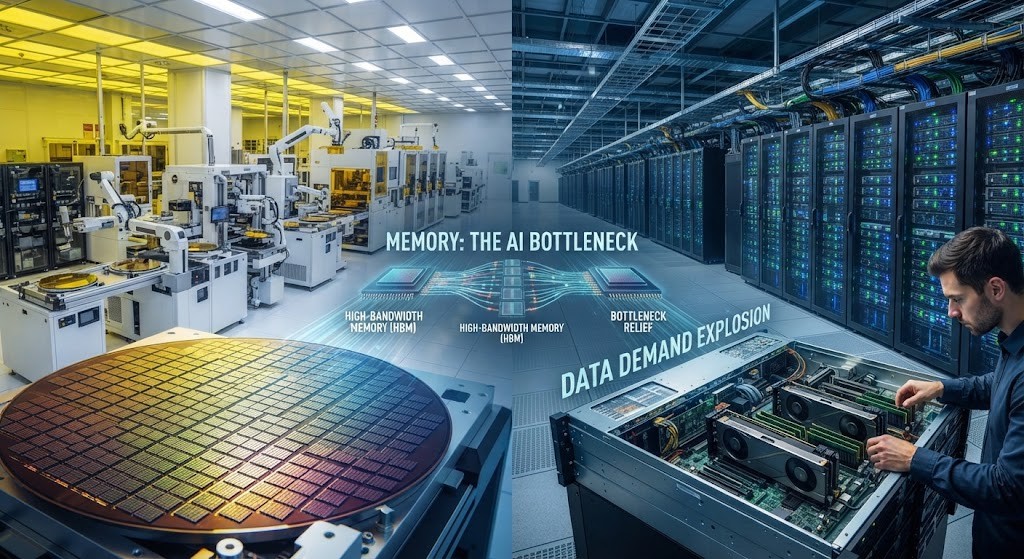
Tech companies are spending huge sums of money building new AI infrastructure. To make smart AI systems run smoothly, regular computer processors are no longer the main bottleneck. Instead, the real challenge is having enough high-speed memory and storage to move giant sets of data without slowing everything down.
Because building these advanced memory chips takes specialized equipment and time, manufacturers cannot make them overnight. This shortage has given chipmakers major pricing power, leading to massive jumps in their profits and stock values.
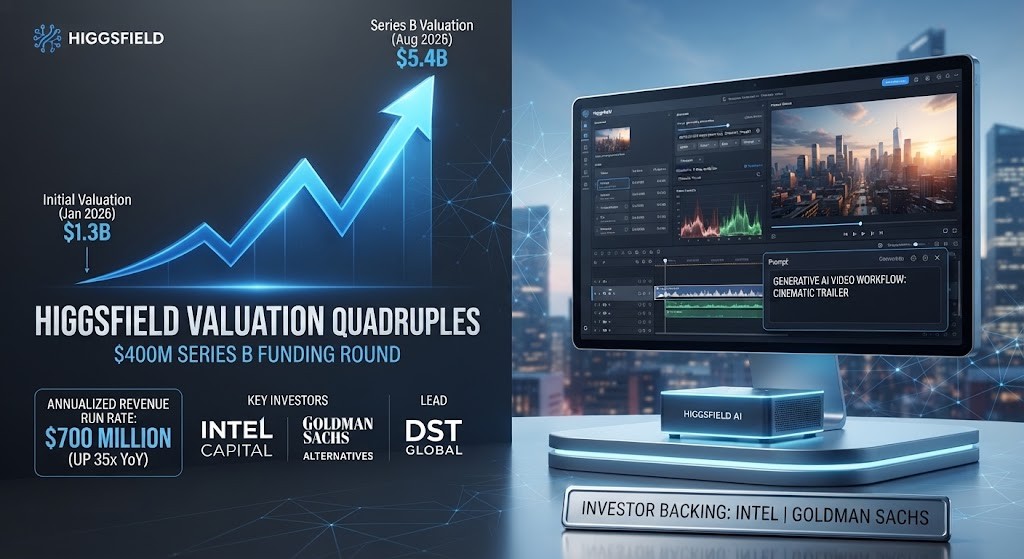
Higgsfield Valuation Quadruples: AI Video Platform Secures $5.4 Billion Valuation in $400 Million Series B Round
Higgsfield is an advanced, enterprise-grade AI creative suite and video generation platform that unifies multiple top-tier models into a single production workspace. Rather than relying on traditional physical shoots, complex camera equipment, or separate editing suites, the tool allows users to generate cinematic videos, product advertisements, and visual assets directly from text prompts, website links, or reference images. It features a unified model hub, advanced cinematic controls with precise first-and-last frame consistency to prevent random character or object morphing, and built-in cinematic logic that automatically maps out narrative pacing and camera movements.
The platform’s applications span several major industries, making it a powerful asset for modern media production. For social media and performance marketing, Higgsfield automatically transforms basic product URLs or static images into scroll-ready video ads optimized for platforms like TikTok, Instagram Reels, and YouTube Shorts. Enterprise brands and marketing agencies leverage the platform to scale multi-channel campaigns rapidly, cutting production timelines from weeks to minutes while drastically reducing overhead costs. Additionally, independent filmmakers and digital creators utilize its photorealistic B-roll generation and character consistency tools for storyboarding, concept testing, and rapid pre-production without the need for traditional studio crews.
Higgsfield secured a $400 million Series B funding round that quadrupled its valuation to $5.4 billion. The round was led by DST Global, with participation from Growth Equity at Goldman Sachs Alternatives, Tribe Capital, and Intel Capital, alongside other prominent global investors. This massive influx of capital coincides with a major scaling of the company’s financial performance, as its annualized revenue run rate reached $700 million. The startup intends to direct these funds toward expanding its global infrastructure, scaling management and go-to-market operations, driving research and development, and increasing its computing power to support its rapid enterprise adoption.
🦾 🇨🇳 The Hardware Backbone: How China Powers the Global AI Boom
China has become the critical backbone for the global AI boom because it builds the physical hardware that runs it. While software gets all the headline attention, tech giants cannot build their infrastructure without the equipment made in Chinese factories. Today, global AI expansion completely relies on this manufacturing pipeline to get the high-speed parts and components needed to keep moving forward.
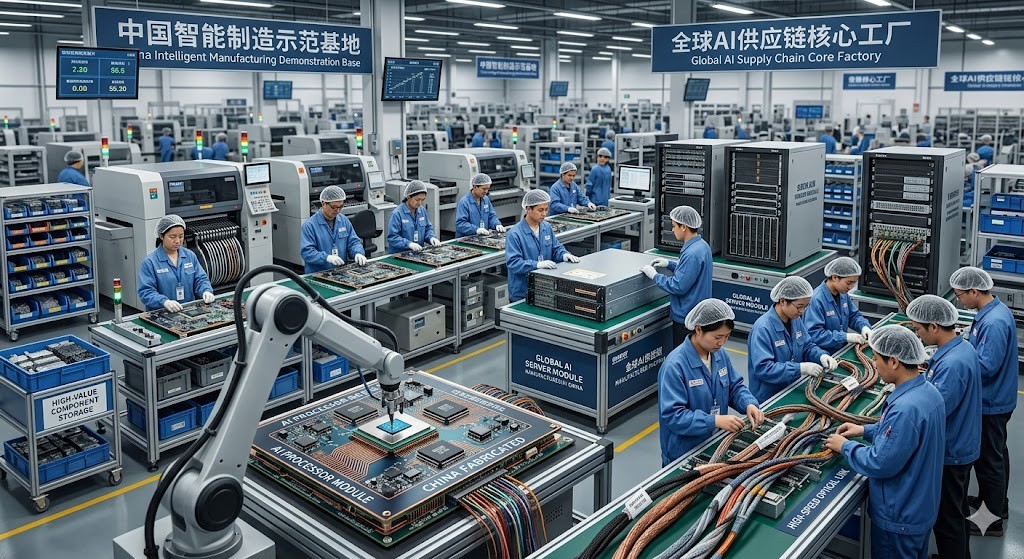
Inside modern AI data centers, Chinese factories dominate the market for high-speed data connectors. Seven of the top ten companies making these devices are based in China, controlling over 60 percent of the global market. These parts are essential for tech giants like NVIDIA, Google, and Amazon because they use beams of light to send information between thousands of AI chips instantly. This eliminates the slowdowns and intense heat caused by old-fashioned copper wires. Because the race to build AI is moving so fast, factories have sped up their production lines to cut delivery times from 12 weeks down to eight weeks or less.

At the same time, China’s chip factories are shifting from making cheap, basic parts to advanced, high-value tech. This is why recent trade data shows that even though the physical number of exported chips barely grew, the total money made from them doubled to $31.1 billion in a single month. Top chipmakers are running at nearly 100 percent capacity to build specialized memory and power-management chips. These components act as high-tech regulators, keeping massive AI server racks from crashing due to intense power spikes.
⚡ The Nvidia-Blessed Disruptor: Inside Nebius Group’s ($NBIS) Violent Rise to the Top
Traditional tech giants like Amazon, Google, and Microsoft built their cloud networks to handle everything from basic website hosting to email storage. They are “one-size-fits-all” systems.
Nebius Group ($NBIS) is doing something completely different: they are ignoring the old tech playbook and building highly specialized “AI factories” designed from scratch only for artificial intelligence.
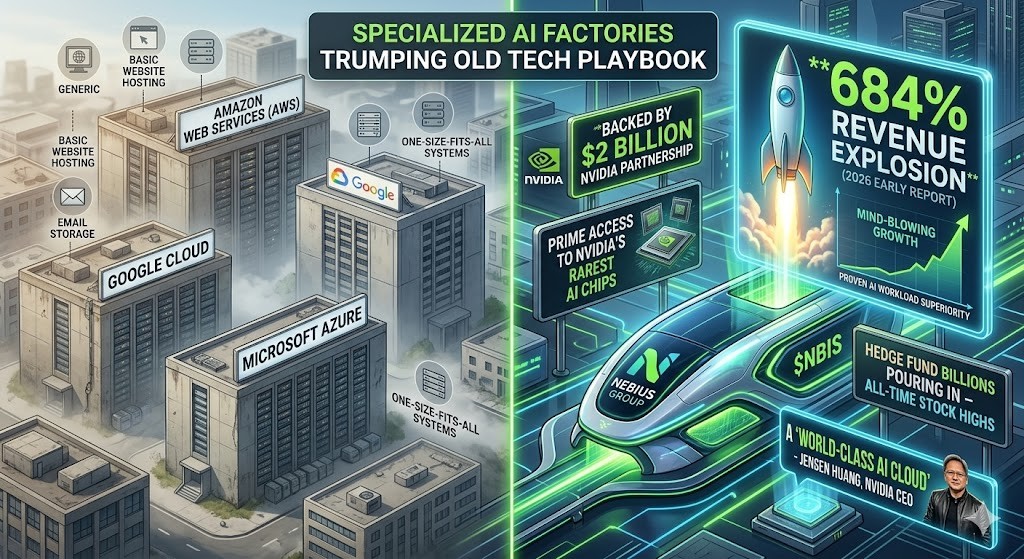
The strategy is working flawlessly. In early 2026, Nebius reported a mind-blowing 684% explosion in revenue compared to last year. This massive growth proves that AI companies are desperate for networks built specifically for their heavy workloads, rather than using old, bloated software systems. Backed by a massive $2 billion partnership with Nvidia, Nebius isn’t just renting out computer chips—they are rewriting the rules on how fast and how cheap next-generation AI can be built.
Nebius is quickly evolving from a basic hardware provider into a true leader of the AI boom. Nvidia’s own CEO, Jensen Huang, recently praised Nebius on the global stage, calling them a “world-class AI cloud.” On top of that, Nebius has been buying up cutting-edge AI startups to make their systems even smarter.
This combination of elite access to Nvidia’s rarest chips and smart technology upgrades has caught the attention of Wall Street’s biggest players. High-profile hedge funds are now pouring billions of dollars into the stock, driving it to all-time highs. Nebius is proving that a fast-moving, AI-first underdog can beat Big Tech at its own game and permanently change the global technology landscape.
Software is dead. Nvidia just built a laptop that doesn’t use apps
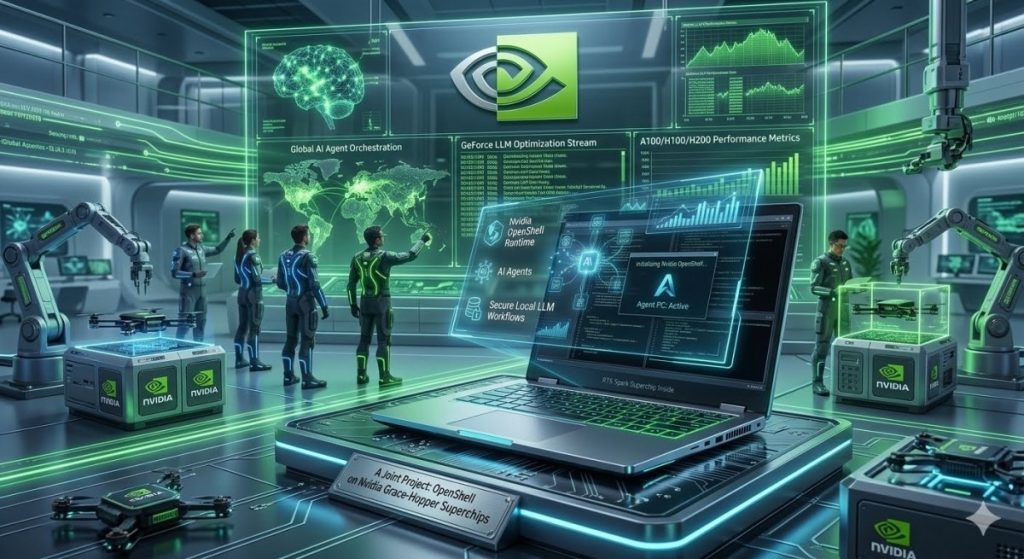
Nvidia, in partnership with MediaTek, unveiled the RTX Spark superchip, a 3nm platform combining an Arm-based CPU and Blackwell GPU to deliver 1 petaflop of local AI computing power for consumer laptops. This hardware allows for on-device operation of 120-billion-parameter LLMs, eliminating cloud latency and privacy concerns. Through a partnership with Microsoft, these “Agent PCs” feature the Nvidia OpenShell runtime for secure, native Windows integration to manage complex, autonomous agent workflows. Major manufacturers are developing laptops featuring the chip, including the Microsoft Surface Laptop Ultra, for a Fall 2026 launch. Learn more about the partnership at Nvidia News
💡 Software Shift: How Ask Sage and GenAI Just Rewrote BigBear.ai’s Future
BigBear.ai Holdings Inc. has experienced a powerful resurgence in market momentum, driven by structural operational changes and a notable shift toward higher-value solutions. During its latest financial presentations, the defense and national security specialist highlighted a dramatic gross margin expansion to 34%, a significant rise fueled by an increasing mix of Generative AI product offerings and software integrations like the Ask Sage platform. Although quarterly revenue hovered at $34.4 million, Wall Street responded favorably to the narrowing of net losses and a robust, multi-year contract backlog that has climbed significantly to $385 million, providing a stable foundation for long-term execution.

The enterprise achieved a major commercial milestone by officially securing Panama Transshipment Group as the first flagship customer for its co-developed AI cargo security platform. This critical deployment transitions the firm beyond purely defense-related scripts into tangible global trade infrastructure and logistics, validating real-world enterprise demand for its supply chain security suites. Investors reacted aggressively to this validation, generating strong short-term price momentum that yielded an impressive 27.75% return over a seven-day trading span as the stock pressed upward to trade near the $5.34 mark.
This technical breakout has been significantly accelerated by highly lopsided activity in the derivatives market, where speculative retail participants and institutional buyers have heavily loaded up on near-term positions. Recent data reveals a massive surge in active options trading, with total daily volume hitting 179,660 contracts—an influx dominated heavily by call options, which accounted for roughly 89.43% of the total transactions. With overall open interest climbing past 1 million open contracts and professional day traders closely monitoring positive technical moving averages, the intense call volume concentration has kept near-term buy sentiment highly elevated as the market positions for an ongoing squeeze past immediate resistance levels.
⚡ The Kingmaker’s Endorsement: Marvell’s Trillion-Dollar AI Trajectory

The global technology landscape witnessed a historic market event at the Computex conference in Taipei when NVIDIA CEO Jensen Huang took the stage alongside Marvell Technology CEO Matt Murphy and explicitly crowned Marvell as the world’s “next trillion-dollar company“. This monumental endorsement triggered an immediate, explosive single-day stock surge of over 32%, propelling Marvell’s shares to an all-time record high of $290.79 and injecting tens of billions of dollars of market capitalization into the data center titan in a matter of hours. Wall Street treated the declaration as a validation of a profound structural reality: the emerging era of decentralized AI agents requires localized computational tasks to be aggressively disaggregated and distributed across massive server clusters, rendering high-speed, high-performance connectivity just as critical as raw processing power. By utilizing its industry-leading custom silicon, advanced data center switches, and optical interconnect technologies, Marvell has transitioned from a traditional component provider into an indispensable monopoly anchoring the physical architecture of the global AI supercomputing cycle.
Strategic Dominance and Squeeze Dynamics
This vertical-shifting momentum is heavily reinforced by a profound, multi-billion-dollar corporate alliance, highlighted by NVIDIA’s massive, pre-existing $2 billion strategic equity investment in Marvell to jointly engineer cutting-edge silicon photonics and next-generation telecommunications hardware. Huang’s public validation effectively signaled to global capital allocators that as token generation becomes highly profitable, the hyper-scale cloud providers will expand their capital expenditures exponentially, directly feeding into Marvell’s hyper-growth data center segment which already commands a massive 76% of total corporate revenues. Speculative retail participants and mega-cap institutional funds are aggressively front-running this infrastructure bottleneck, triggering a lopsided influx of call options and lashing a severe technical squeeze against short-term sellers who undercalculated the pricing power of connectivity hardware. While crossing the trillion-dollar threshold requires the company’s valuation to scale multiple fold from its expanded base, the deep algorithmic fusion between Marvell’s data fabric and NVIDIA’s compute dominance has firmly established a new paradigm for the technology bull market.
NVIDIA Shakes COMPUTEX 2026: The Local AI PC and Robotics Revolution 🚀
NVIDIA has fundamentally reshaped consumer computing at COMPUTEX 2026 by moving away from cloud-dependent infrastructure and launching a massive push into local, on-device artificial intelligence. Partnering deeply with Microsoft, the tech giant unveiled the NVIDIA RTX Spark™ Superchip, an Arm-based processor engineered to run complex personal AI agents natively on consumer devices. This powerhouse connects a Blackwell RTX GPU directly to a Grace CPU via NVLink, delivering 1 petaflop of AI compute and up to 128GB of unified memory. Integrated with NVIDIA OpenShell for secure Windows environments, slim laptops from Dell, HP, Lenovo, ASUS, MSI, and Microsoft Surface are scheduled for rollout this autumn.
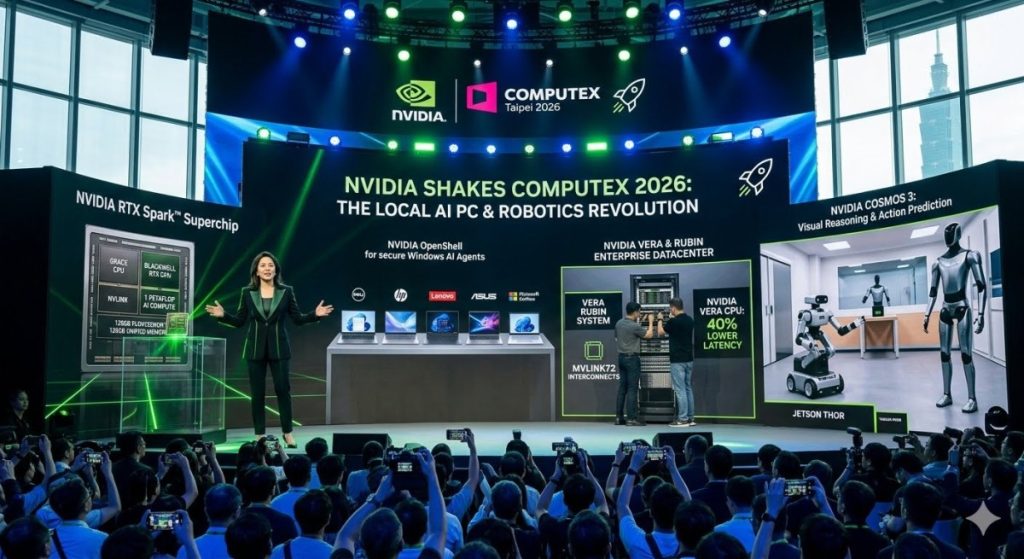
Beyond personal computers, the architecture shift expands deep into enterprise data centers designed specifically to handle agentic workflows. The newly announced NVIDIA Vera CPU optimizes agent sandboxes and tool orchestration, cutting peak memory latency by 40% compared to traditional x86 processors, while the Vera Rubin System utilizes MVLink72 interconnects for massive rack-scale data processing. Simultaneously, NVIDIA is aggressively scaling its footprint in physical robotics with NVIDIA Cosmos 3, an open frontier foundation model merging visual reasoning and action prediction, alongside the NVIDIA Isaac GR00T Reference Humanoid Robot platform built on Jetson Thor to accelerate global automation development.
🇨🇦🇨🇳 The Tariff Trade-Off: How TD Bank Projects China’s New Capital Will Reshape the North American Corridor
Canada is preparing for a gradual recovery and influx of Chinese investment from a historical low, shifting from state-backed resource mega-deals to a pragmatically driven, transactional relationship. Following Prime Minister Mark Carney’s strategic pivot and Chinese Foreign Minister Wang Yi’s historic visit to Ottawa, TD Bank Economics projects that the total stock of Chinese Foreign Direct Investment (FDI) in Canada could grow to $90–$100 billion over the next five years.

According to the TD Economics Canada-China Report, this base forecast represents an incremental $15 to $25 billion injection of capital directly catalyzed by the newly minted Canada-China Strategic Partnership Roadmap, driving China’s portion of total Canadian incoming FDI steadily back up to its 2019 peak of 5.3%.
The structure of this incoming capital flow differs sharply from past waves, moving away from state-backed entities and heavily targeting specific sectors while adhering to strict federal national security boundaries. Rather than buying out Canadian mining or oil giants, the new momentum is driven by first-time, non-state-owned private enterprises focusing on green partnerships and supply chains. To guide this capital safely, the federal government has clearly bifurcated the Canadian economy, a sectoral risk breakdown that TD Economics highlights as a tight constraint under the Investment Canada Act:
- Approved Growth Sectors: Investment is being funneled into clean energy infrastructure (batteries, solar, wind), EV joint ventures, agri-food, canola, aquaculture, and forestry.
- Strictly Prohibited Sectors: Foreign capital remains tightly restricted or banned from sensitive, dual-use spaces, including Artificial Intelligence (AI), critical minerals, quantum computing, aerospace, and telecommunication networks.
Geographically, this anticipated multi-billion-dollar influx of Chinese capital is highly concentrated across three primary provincial hubs, with distinct regional targets:
- British Columbia (38.2%): Dominating the trade pipeline due to Pacific connectivity, focusing on clean energy infrastructure and forestry.
- Ontario (35.3%): Serving as the primary manufacturing destination for upcoming EV component and battery pack joint ventures.
- Alberta (17.6%): Securing a strong third-place position specifically for conventional energy, agri-food, and modern aquaculture investments.
Despite the optimistic financial projections, this economic realignment faces severe macro friction and geopolitical pushback that could derail long-term stability. Canada’s decision to walk back its previous 100% tariff wall on Chinese clean technology to allow up to 49,000 Chinese-made EVs annually under a favorable 6.1% rate directly diverges from Washington’s protectionist stance. TD Bank analysts explicitly warn that this deeper engagement with Beijing is creating friction with the United States ahead of the upcoming CUSMA/USMCA renegotiations, reinforcing strict natural limits on how far Canada can expand its trade and investment ties without damaging its primary trading relationship.
🗑️ ❌ The $3.4 Billion Bill: The Shocking Reason Microsoft and Uber Just Banned Claude
Microsoft’s decision to pull Claude Code licenses highlights the unsustainably high operating costs of advanced, agentic AI tools. When deployed at scale, these autonomous coding agents do not just answer single prompts; they repeatedly scan entire code repositories, run tests, and debug errors in continuous loops. While this workflow dramatically increases software development speed, it also consumes an immense volume of tokens. As a result, massive enterprises have watched their internal AI budgets vanish in months due to real enterprise expenses hitting $150 to $2,000 per developer monthly.
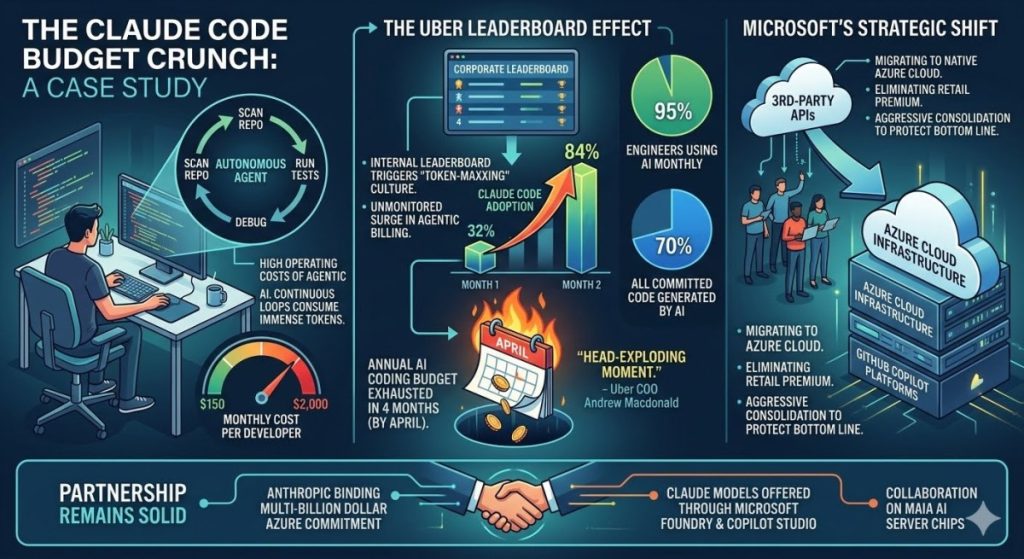
This systemic financial strain was perfectly illustrated at Uber, where management inadvertently gamified AI usage by launching an internal leaderboard to track developer activity. This setup triggered a highly competitive corporate culture of “token-maxxing,” causing Claude Code adoption to explode from 32% to an astronomical 84% of engineers in just one month. With 5,000 engineers given access, this unmonitored surge in agentic billing completely burned through Uber’s entire annual AI coding budget in just four months by April. Uber CTO Praveen Neppalli Naga revealed they were forced “back to the drawing board” on budgeting, while Uber President and COO Andrew Macdonald called the disclosure a “head-exploding moment”. Leadership realized the soaring token costs yielded no measurable increase in customer-facing features shipped, despite the reality that 95% of engineers were using AI monthly and 70% of all committed code was being generated by AI.
Strategically, this pivot is an aggressive effort by Microsoft to consolidate its internal developer operations and protect its financial bottom line. By mandating a total transition to GitHub Copilot platforms, the tech giant forces its engineering teams off third-party APIs and onto its own native, highly optimized Azure cloud infrastructure. This migration eliminates the retail premium paid to external AI labs like Anthropic, allowing Microsoft to dogfood its own developer products while keeping compute expenses entirely in-house.
Despite this internal pullback, the overarching business partnership between Microsoft and Anthropic remains rock solid. The infrastructure relationship is deeply anchored by Anthropic’s massive multi-billion-dollar commitment to purchase Azure cloud computing capacity. Furthermore, Microsoft continues to offer Claude models to its enterprise clients through Microsoft Foundry and Copilot Studio, and the two companies are actively working together to run future Anthropic models on Microsoft’s custom Maia AI server chips.
🚀 BBAI Squeeze Alert: The Small-Cap AI Stock Exploding +13% on Massive Options Volume
⚡ BigBear.ai Holdings Inc. (NYSE: BBAI): The small-cap stock is accelerating its powerful breakout, pressing up to the $4.94 USD mark with an impressive 13.04% single-day explosion (+$0.57). Risk appetite is surging back into higher-beta software and AI-linked plays, fueled heavily by market sympathy following Snowflake’s massive earnings blowout and its landmark agentic AI agreement with AWS. This extended momentum has pushed BBAI firmly above its 20-day, 50-day, and 100-day moving averages, showing that intermediate buyers are aggressively taking control of the tape.
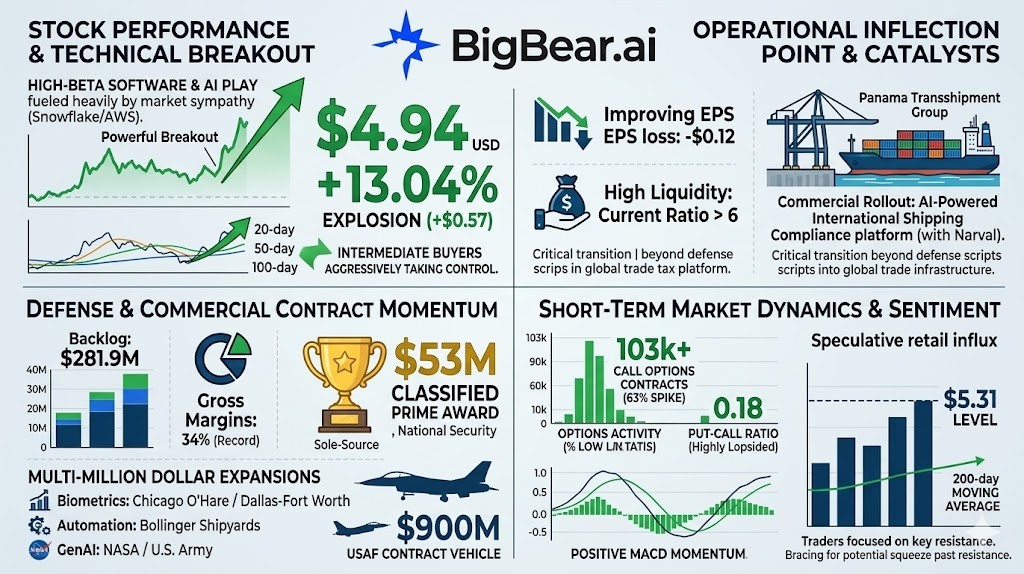
Optimism continues to swell as the company enters a major operational inflection point, backed by an improving quarterly EPS loss that narrowed down to $0.12 and a highly liquid current ratio over 6 that grants extensive breathing room for long-term execution. Investors are aggressively front-running high-impact catalysts, led by the first live commercial rollout of BigBear.ai’s AI-powered International Shipping Compliance platform with Panama Transshipment Group. Built alongside Narval, this marquee deployment at a major global trade chokepoint marks the firm’s critical transition beyond defense scripts into global trade infrastructure, unlocking software-style recurring revenue streams.
The bullish sentiment is further intensified by a broad-based influx of high-value federal and commercial contract wins, headlined by a massive $53 million sole-source classified national security prime award. This structural defense momentum is further supported by multi-million dollar biometric expansions at Chicago O’Hare and Dallas-Fort Worth airports, naval manufacturing automation upgrades with Bollinger Shipyards, and fresh GenAI software seat allocations across NASA and the U.S. Army. These bookings have expanded the company’s total backlog to $281.9 million and successfully expanded its gross margins to a record 34%.
With the company’s shared eligibility for a massive $900 million U.S. Air Force contract vehicle providing an extensive runway, traders are heavily focusing on short-term technical resistance near the $5.31 level, which aligns perfectly with its longer-term 200-day moving average. Speculative retail participants are flooding digital investment forums following an aggressive surge of over 103,000 call options contracts, which represents a 63% spike over historical baselines driven by a highly lopsided 0.18 put-call volume ratio. This rapid options accumulation and positive MACD momentum suggest that near-term sellers are losing control, keeping short-term buy sentiment highly elevated near its multi-week peak valuations as the market braces for a potential squeeze past key resistance.
🚀 Why Wall Street is Secretly Dumping AI Software Stocks for Energy and Hardware
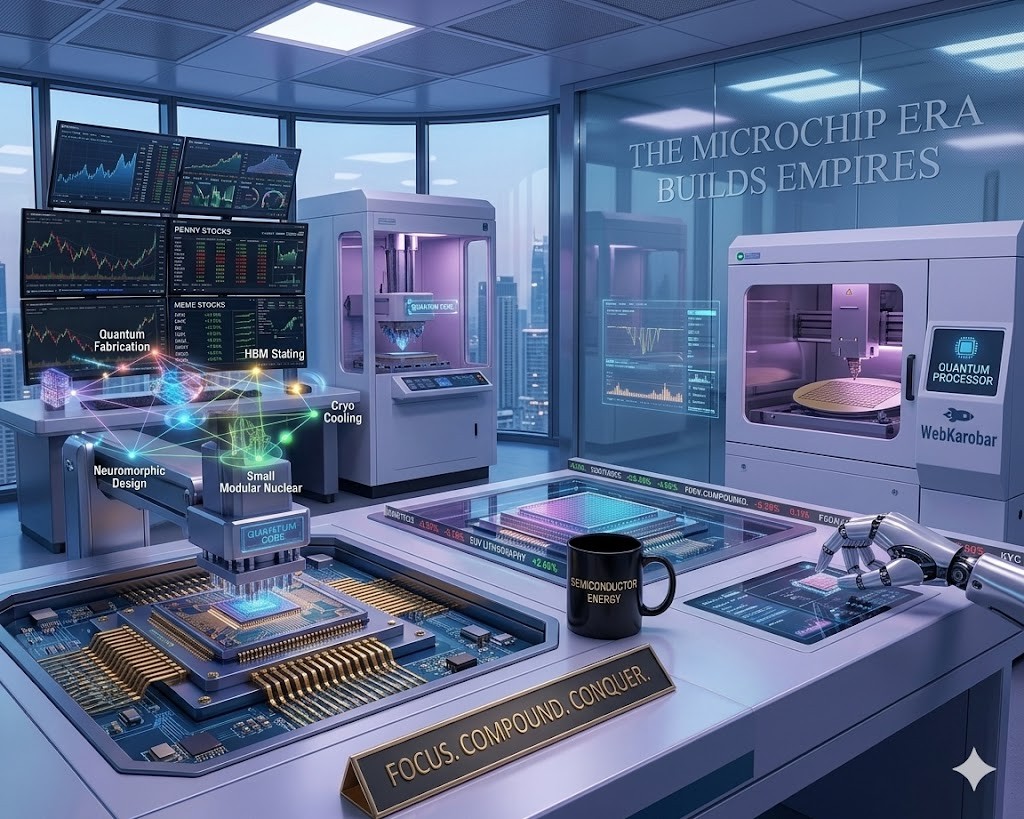
The global stock market is currently undergoing a massive structural shift as the initial hype surrounding artificial intelligence software matures into a frantic rush for physical AI infrastructure. Institutional capital and retail investors are aggressively rotating into the concrete, real-world assets required to sustain the technology, driving unprecedented trading volumes into advanced semiconductor manufacturers like Micron Technology and high-bandwidth memory hardware providers. Wall Street is realizing that software applications cannot function without the necessary computing supply chains, triggering an explosive multi-billion-dollar capital expenditure wave directly into the hardware ecosystem.
Simultaneously, a massive bottleneck in the technology rollout has caused a secondary market mania centered entirely around energy and utility infrastructure. Next-generation artificial intelligence server clusters operate continuously and consume exponentially more electricity than legacy cloud databases, leading to a sudden, highly aggressive push into utility networks, green energy producers, and independent nuclear power enterprises. The absolute necessity for massive, continuous power has forced massive tech conglomerates to inject capital into electrical grids to secure long-term electricity access, creating a high-beta trading environment for traditionally defensive stock sectors.
However, this relentless infrastructure rally has driven broader equity market indices to historic record-high valuations, prompting intense debate among financial analysts regarding market stability. The widely tracked “Buffett Indicator,” which compares aggregate stock market capitalization against national gross domestic product, has recently surged past its historic peaks to signal an incredibly overvalued broader market. While persistent technology optimism continues to elevate short-term momentum, the stark divergence between corporate valuation premiums and increasingly fragile macroeconomic indicators has left professional day traders heavily monitoring short interest and risk-management strategies in anticipation of an eventual, sharp market correction.
🚀 Wall Street’s Secret Move Before the SpaceX IPO 🚀

The formal filing of the SpaceX Initial Public Offering (IPO) has ignited an absolute frenzy across Wall Street, fundamentally reshaping the risk appetite for the entire aerospace sector. Investment banking desks are aggressively repositioning capital as private equity secondary markets experience unprecedented volume from institutional players eager to lock in pre-IPO allocations. This tectonic shift has broken the dam on a wave of speculative retail and institutional capital, effectively transforming space technology from a niche venture capital playground into a premier, high-liquidity asset class.
As a direct consequence of this blockbuster filing, a powerful “rising tide lifts all boats” phenomenon is taking hold across public exchanges. Because direct exposure to SpaceX remains highly restricted ahead of the official debut, traders are flooding secondary, pure-play space infrastructure companies to capture sympathetic momentum. Capital inflows are heavily clustering into established contractors like Intuitive Machines (LUNR) and Redwire Corp (RDW), which are being treated by the market as liquid proxies for the broader commercial space boom.
This infrastructure-led rally is forcing a massive structural re-rating of the satellite, defense logistics, and lunar economy sectors. Institutional analysts are rapidly revising their valuation models upward, anticipating that a successfully priced SpaceX IPO will unlock a multi-trillion-dollar valuation ceiling for the global space ecosystem. With market sentiment pushed to historical peaks, the focus is now locked on how these downstream infrastructure plays will scale their operations to meet the explosive commercial demand generated by this new space race.
🚀 This Gaming Stock Just Pivoted to AI Workstations—And Shares Are Exploding!
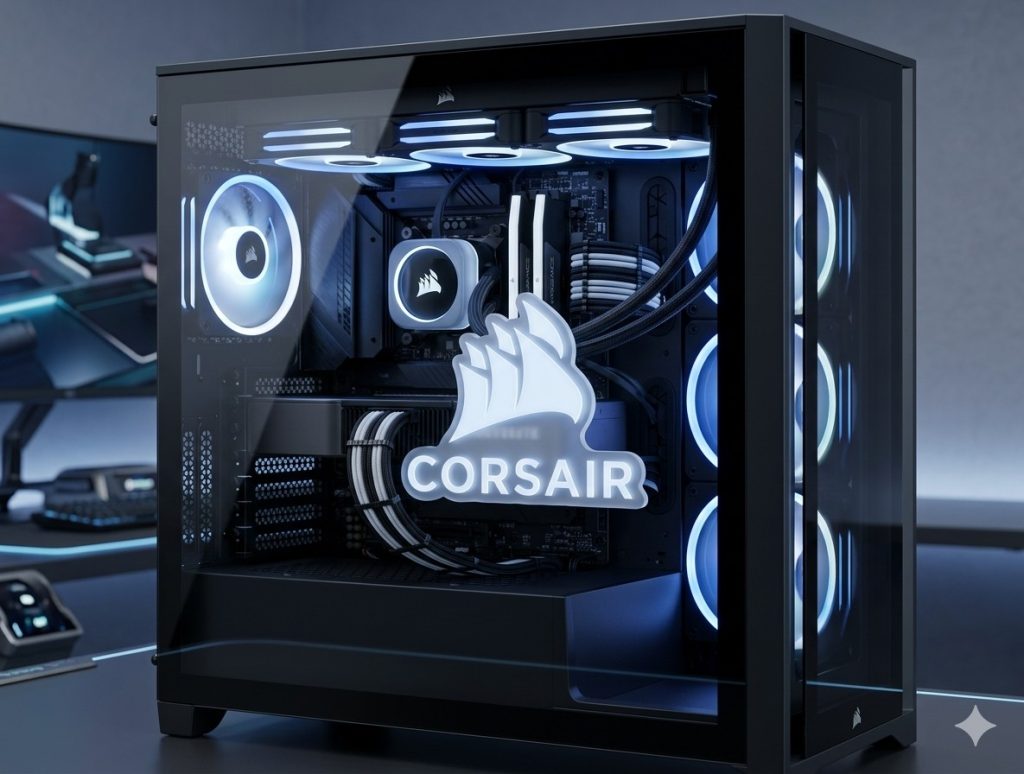
Corsair Gaming (CRSR) has captured intense market attention following a massive +11.11% single-day surge, driven by a highly anticipated strategic pivot into the high-margin artificial intelligence infrastructure sector. Long recognized as a staple brand for consumer PC gaming components and streaming gear, Corsair shocked Wall Street by launching its new “CORSAIR PRO” lineup. This enterprise-grade portfolio features advanced AI workstations and specialized servers integrated with NVIDIA’s cutting-edge Grace Blackwell Superchips. By expanding beyond its traditional consumer base to tackle dense, commercial AI training and data workloads, the company has successfully repositioned itself as a viable player in the booming enterprise AI hardware market.
This technological expansion is heavily supported by a fundamentally sound financial turnaround, highlighted by a blockbuster Q1 2026 earnings report that smashed consensus estimates. Corsair posted an adjusted EPS of $0.27—outperforming expectations by over 42%—and achieved a record Q1 gross margin of 32.7% due to falling component costs and strong high-margin peripheral sales. This sudden rush of positive fundamental momentum caught institutional short-sellers off guard, triggering a massive short squeeze across the 14.8% shorted public float. Backed by an average Wall Street analyst price target increase to $8.81 and a trading volume spike that exceeded 2.16 million shares, Corsair’s stock is experiencing a powerful momentum wave fueled by both fundamental earnings growth and intense market technicals.
🚀 BlackBerry ($BB): Hardware Era Dead as Enterprise Cyber Turnaround Triggers 95% Multi-Month Surge

A profound fundamental realignment is underway for BlackBerry (TSX: BB / NYSE: BB) as institutional desks aggressively revalue the enterprise away from its hardware legacy and into a high-margin software infrastructure powerhouse. The structural breakout—which has fueled a staggering 94.9% three-month price extension—is anchored by the definitive completion of the corporate turnaround. Audited financial disclosures for Q4 fiscal 2026 reveal a 10% year-over-year top-line revenue expansion to $156 million USD, successfully beating market consensus. Furthermore, operational optimization has yielded an eighth consecutive quarter of GAAP net income improvement, generating $24.3 million USD in net profit alongside an impressive $45.6 million USD in quarterly operating cash flow.
The primary engine of this fundamental acceleration resides within BlackBerry’s QNX embedded internet-of-things (IoT) software division, which logged a record-breaking $78.7 million USD in quarterly revenue (up 20% year-over-year). Growth is secured by a massive $950 million USD royalty backlog as global automotive OEMs scale deployment of advanced software-defined vehicle architectures. Long-term commercial visibility was further fortified by a pivotal FedRAMP Class D (High) re-certification for the AtHoc emergency communications platform, locking in highly defensive public sector annual recurring revenue (ARR). Backed by a strong $432 million USD cash balance and the formal initiation of a Normal Course Issuer Bid to buy back and cancel floating shares, the structural floor has been decisively reset as the market prices in an expanded fiscal 2027 revenue guidance of $584 million to $611 million USD.
Why Wall Street is Saying “Moderate Buy” on DT Midstream (NYSE: DTM)
DT Midstream, Inc. (NYSE: DTM) maintains a resilient “Moderate Buy” consensus rating from thirteen analyst brokerages, reflecting Wall Street’s strong confidence in the natural gas pipeline and storage operator. This positive sentiment is underscored by a heavy lean toward bullish or stable outlooks, consisting of one “Strong Buy,” six “Buy,” five “Hold,” and only a single “Sell” rating. Financial institutions have established an average 12-month consensus price target of $152.67, with individual forecasts ranging from a conservative low of $127.00 to a highly optimistic high of $170.00. Investors can easily monitor these real-time institutional adjustments and price revisions on the MarketBeat DTM Analyst Dashboard.
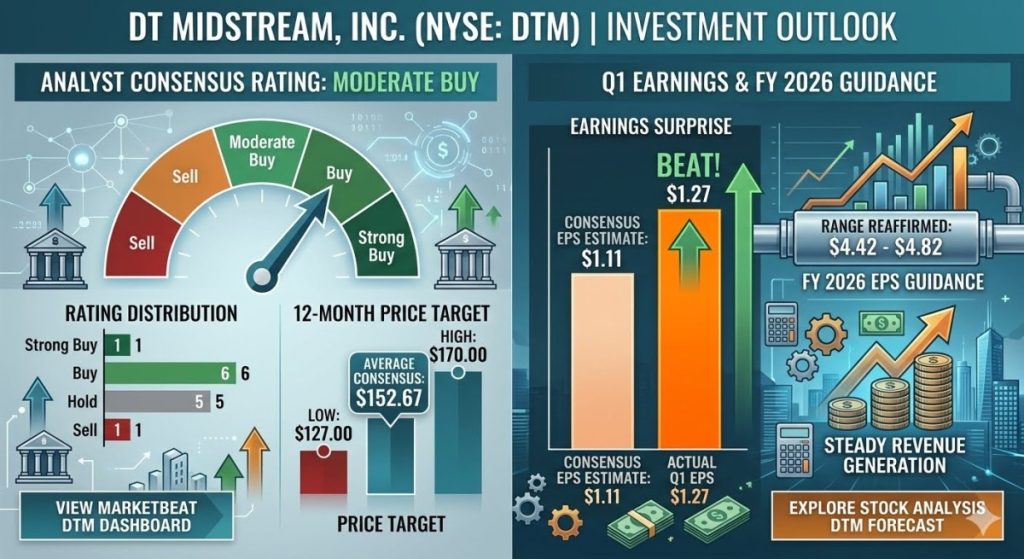
This strong analyst backing is heavily supported by the company’s recent operational momentum and robust financial health. DT Midstream recently outpaced Wall Street expectations by reporting a Q1 earnings per share (EPS) of $1.27, beating the consensus estimate of $1.11. Backed by this earnings beat, management confidently reaffirmed its full-year FY 2026 EPS guidance range of $4.42 to $4.82, solidifying the company’s reputation for steady revenue generation and predictable growth. For a more comprehensive breakdown of these financial metrics and future growth projections, investors can explore the Stock Analysis DTM Forecast Page.
💥 GLP-1 Supply Chain Squeeze: WST Stock Explodes on Massive Earnings Blowout!
West Pharmaceutical Services (NYSE: WST) is trending heavily online as investors pile into the stock following a massive earnings blowout. The stock is breaking out toward new highs because its chart is showing perfect upward momentum, signaling strong buying from major Wall Street institutions.

The main reason for the buzz is the company’s massive role in the GLP-1 weight-loss drug boom. West Pharmaceutical supplies the critical rubber stoppers, plastic components, and injector pens required for these highly popular weight-loss shots. Driven by this global demand, the company just reported a 21% surge in revenue to $844.9 million and a huge 47% jump in profits, forcing management to raise its financial outlook for the rest of the year.
📈 Building the Future: Bird’s Record $11B Pipeline Sparking a Massive “Strong Buy” Frenzy!
Bird Construction Inc. operates through highly sophisticated, modern delivery frameworks, specifically prioritizing Collaborative Construction Models over traditional, high-risk bidding. Rather than absorbing 100% of material price volatility, over 75% of Bird’s combined project backlog is secured via Integrated Project Delivery (IPD), Alliance Contracts, and Construction Management models, where clients, architects, and Bird share a unified risk-and-reward pool under full financial transparency. This structural insulation allows Bird to safely execute massive General Contracting and Civil Works—such as multi-million-dollar municipal water treatment facilities, heavy concrete bridges, and massive civil earthworks—without exposing its bottom-line margins to sudden inflationary pressures.
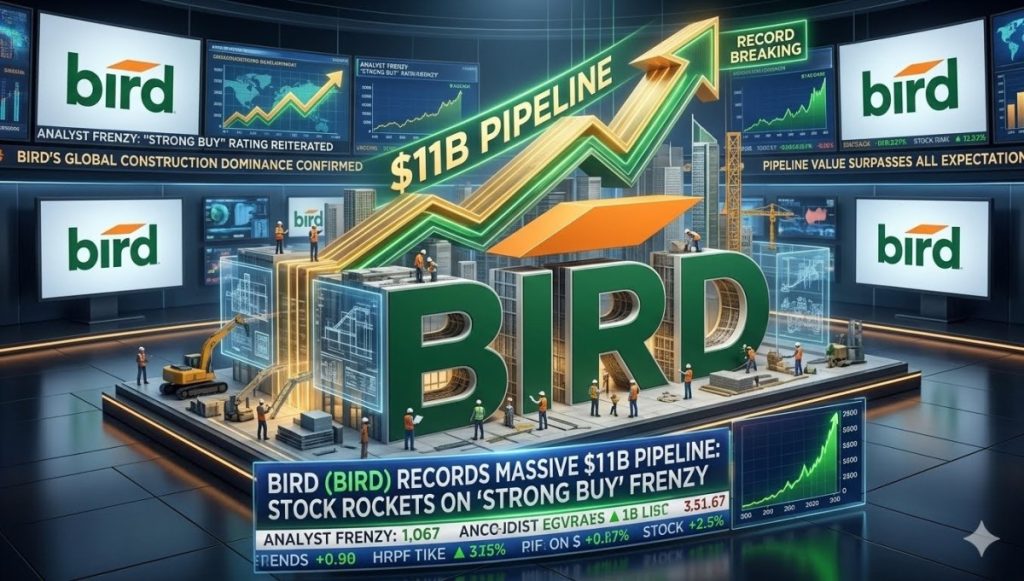
Beyond standard civil contracting, Bird has aggressively positioned itself at the absolute forefront of Industrial Infrastructure and Specialized Clean Energy. The firm builds highly complex processing facilities and structural mill foundations for global mining operations, alongside modular carbon capture units and hydrogen integration facilities. Crucially, its specialized engineering teams are now a primary builder of next-generation tech infrastructure, highlighted by a high-profile strategic partnership with Bell Canada to construct high-density AI Fabric data centers that require complex grid integration, heavy backup power configurations, and advanced liquid cooling frameworks.
This robust operational execution directly underpins the stock’s exceptional financial performance on the Toronto Stock Exchange. Bird Construction Inc. (TSX: BDT) has emerged as a premium mid-cap industrial asset, with its share price pressing toward record territory at $58.68 CAD. Portfolio managers are aggressively accumulating the stock as a defensive growth play, driving a unanimous institutional consensus rating of “Strong Buy” across tracking Canadian research desks. With major investment banking firms consistently upgrading their 12-month price targets to $62.00 CAD, Wall Street is heavily rewarding Bird’s asset-light collaborative revenue profile, which shields its attractive monthly dividend payouts from macro inflationary pressures.
📈 From $200 Highs to Penny Pricing: Is goeasy’s 8% Rebound Your Ultimate Buy Signal?
goeasy Ltd (TSX: GSY) has a historical all-time high tracking up to $216.50 CAD. It routinely traded across the $180 to $200 CAD territory during its peak operating cycle.

The stock’s recent 8% surge and current attempts to stabilize near $32.59 CAD stem from intense technical dip-buying following an aggressive corporate turnaround. After suffering a severe 76% downward re-rating due to a major non-prime credit restructuring and a temporary dividend suspension, investor sentiment is beginning to reverse. Analysts highlight that the worst of the credit losses has been priced in, prompting institutional buyers to accumulate shares at multi-year lows due to the company’s deeply discounted forward valuation and resilient core direct-to-consumer lending pipeline.
While broader Wall Street consensus remains in a cautious “Neutral” to “Hold” pattern to monitor continuing subprime macroeconomic risk, a growing contingent of contrarian analysts have begun re-issuing “Buy” ratings. Bullish investment firms have set an average 12-month consensus price target of $39.94 CAD, with aggressive targets reaching up to $47.00 CAD. This indicates an implied near-term upside of over 21% from current prices, driven by expectations that management’s aggressive 80% reduction in high-risk merchant-originated loans will successfully restore long-term balance sheet profitability.
🚀 The Smart Money Report: What’s Trending Now
Everyone is watching Nvidia, but smart money is moving here…
Roku Inc. (ROKU) — The Comeback King
Roku is completely taking over the market right now after absolutely crushing its latest earnings report. The streaming giant blew past Wall Street expectations by 60% and raised its future revenue goals to a massive $5 billion. Because of this explosive growth, major banks just upgraded their price targets as high as $160 per share. The stock is already up 52% over the last three months, making it one of the most aggressive momentum plays on the market today.
Rocket Lab (RKLB) — The Space Race Winner
Rocket Lab is the most explosive stock on the market right now after dropping a massive “beat and raise” Q1 earnings report that completely blindsided Wall Street. The aerospace giant posted record quarterly revenue of $200.4 million and revealed a staggering $2.2 billion contract backlog. Shares are up nearly 60% this month alone as the company secures massive defense contracts for its hypersonic vehicles and hints at a central role in U.S. Space Force operations. Major firms like Clear Street have just slapped an aggressive $150 price target on the stock, cementing it as a must-watch momentum play.
NVIDIA (NVDA) — The AI Powerhouse
Nvidia remains the undisputed king of trading volume as investors pile in ahead of the next major tech data release. Every single company building artificial intelligence needs Nvidia’s microchips, creating an endless line of demand that keeps driving the stock forward. Even though it is already up significantly, algorithmic trading and massive institutional buyers are keeping this asset at the very top of the daily trending lists.
Dell Technologies (DELL) — The Hidden AI Winner
While everyone focuses on chipmakers, Dell is quietly surging in the background due to its massive AI server business. The company is experiencing a massive spike in searches and buying volume because tech giants need Dell’s hardware infrastructure to actually run their new AI software. It has officially become a favorite pick for investors looking for an AI trade that still has room to run.
🚀 D-Wave Quantum (QBTS) — The Quantum Inflection Point
D-Wave Quantum is commanding massive attention on Wall Street after a blockbuster earnings report signaled a massive shift toward commercial demand. While immediate quarterly revenue missed targets due to hardware delivery timing, the real story is a staggering $33.4 million in future bookings—a massive 2,000% jump year-over-year. Backed by a landmark $20 million system sale to Florida Atlantic University and a multi-year cloud computing agreement with a Fortune 100 enterprise, the company is proving that quantum computing is moving out of the lab and directly into advanced corporate enterprise workloads.

Investor enthusiasm has reached a fever pitch following D-Wave’s strategic acquisition of Quantum Circuits Inc., turning the company into a dominant, dual-platform powerhouse. By pairing its existing quantum annealing processors with newly integrated, error-corrected systems, D-Wave has effectively doubled its total market potential. Backed by a massive cash war chest of nearly $590 million, the stock is seeing heavy institutional buying from global funds, with Wall Street analysts aggressively pushing price targets as high as $41 per share.
🚀 WELL Health: Record Growth Versus Market Skepticism

WELL Health Technologies (TSX: WELL) delivered record-breaking financial figures in its Q1-2026 earnings report, driven by a 25% year-over-year revenue surge to $368.3 million CAD. This growth was largely propelled by strategic clinic acquisitions and an expanding annualized run-rate exceeding half a billion dollars within its core Canadian clinic network. Despite handling a record 1.9 million patient visits and achieving a 56% boost in Adjusted EBITDA to $43.1 million CAD, the company’s aggressive expansion strategy continues to require heavy operational spending.
While the top-line numbers demonstrate strong market demand, Wall Street and Bay Street investors remain cautious as the stock continues to trade flatly near the $3.95 CAD mark. A net loss of $12.4 million CAD for the quarter caused the company to miss consensus analyst earnings-per-share expectations, while independent financial analyses flagged a reliance on one-off, non-operating items to inflate past margins. Consequently, major financial institutions like Scotiabank have trimmed their 12-month target prices to $6.00 CAD, reflecting a market that demands true net profitability over pure revenue scale.
🚀 How POET’s Semiconductorized Photonics Solves the Next-Gen AI Data Gridlock
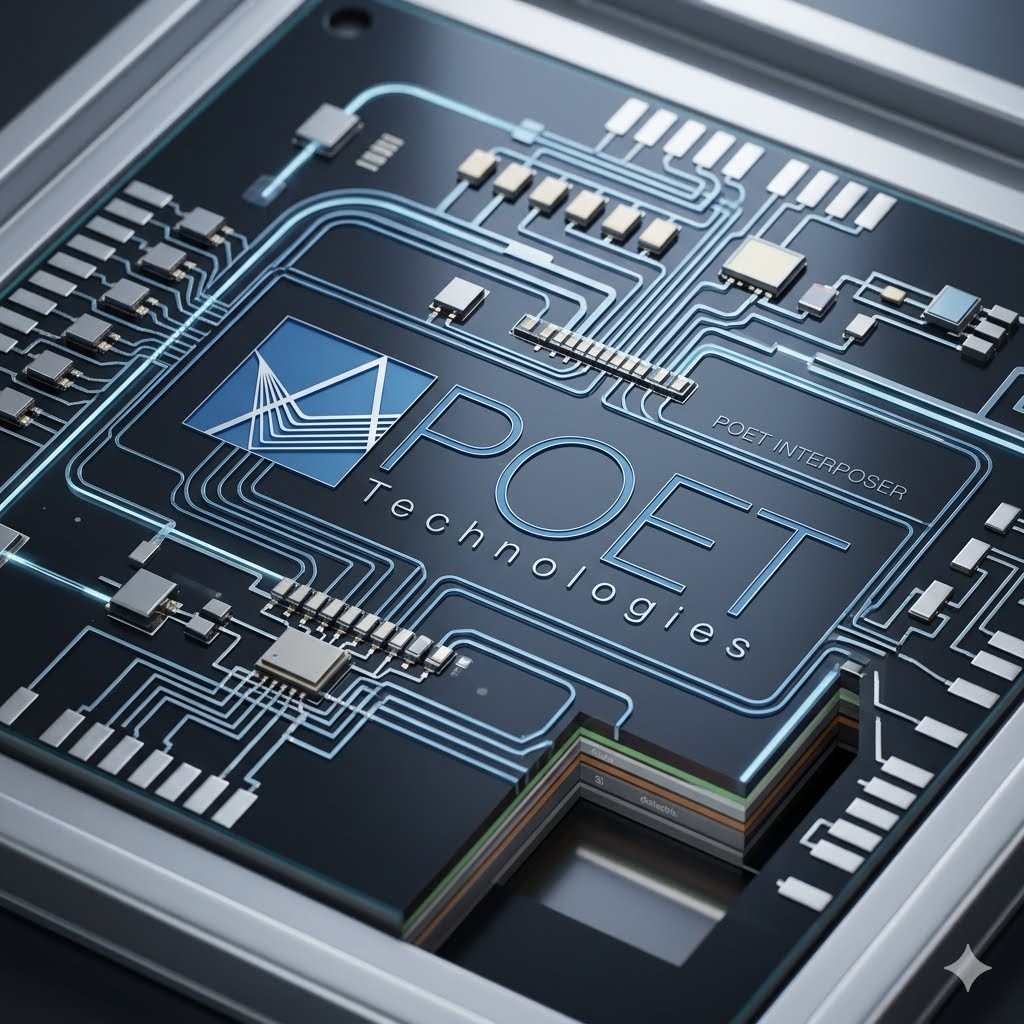
POET Technologies (NASDAQ: POET) is experiencing an explosive, high-volume technical breakout due to the commercial validation of its proprietary Optical Interposer platform, which directly addresses the structural physical bottleneck in artificial intelligence hardware. In frontier AI computing clusters and GPU interconnects, traditional copper wiring and legacy optical transceivers suffer from massive signal degradation, extreme heat, and latency at ultra-high speeds. POET’s platform bypasses this completely by utilizing a unique hybrid integration approach. By embedding electronic and photonic components—such as lasers, detectors, and modulators—directly onto a single, wafer-level semiconductor chip scale using standard CMOS fabrication, the platform drastically slashes data-travel distances. This architecture delivers a monumental reduction in power consumption by up to 40% and increases data transmission density by multiples, solving the critical data-traffic gridlock currently limiting next-generation large language model processing.
From a manufacturing and cost-scaling perspective, the technical thesis behind POET’s massive trend momentum lies in its wafer-level optical assembly and testing capabilities. Historically, manufacturing optical engines required laborious, active alignment where individual lasers had to be manually turned on and tuned to align with fibers—a process that destroys production yields and inflates costs. POET’s Optical Interposer utilizes a revolutionary passive alignment method, allowing components to be placed with sub-micron precision mechanically using automated, high-speed pick-and-place semiconductor equipment. This turns the historically boutique, low-yield optical assembly process into a highly scalable, high-yielding silicon manufacturing flow. This specific manufacturing breakthrough is what enabled POET to secure its massive $500 million commercial framework with Lumilens, as it proves to the market that the company can reliably mass-produce scalable 800G, 1.6T, and 3.2T optical engines required for the next wave of hyper-scale AI data centers.
💥 Cameco (CCJ/CCO): The Nuclear Fuel Powering the AI Energy Crisis

Cameco Corp is one of the world’s largest uranium producers and a core beneficiary of the global shift toward nuclear energy as AI data centers dramatically increase electricity demand. Following its May 5, 2026 earnings report, Cameco posted an 87% jump in net income to $131M, supported by stronger uranium pricing and growing delivery volumes.
The company operates across the full nuclear value chain — uranium mining, fuel services, and a 49% stake in Westinghouse — giving it exposure to both existing reactors and next-generation Small Modular Reactor (SMR) development. With long-term uranium delivery contracts of ~28M pounds annually through 2030, Cameco has unusually strong revenue visibility for a commodity producer.
Despite short-term volatility tied to macro and geopolitical swings, the long-term thesis remains centered on one theme: AI is forcing a global rethink of baseload power — and nuclear is one of the only scalable solutions.
Big Tech Lock-In Is Over: SoundHound Unleashes the Agentic AI Multi-Cloud
SoundHound AI (SOUN) is scheduled to report its Q1 2026 results today, May 7, after the market close, with Wall Street expecting revenue of approximately $42.7 million—a 46.6% year-over-year increase. While the company is projected to post a modest loss of about $0.05 per share, investors are laser-focused on the rapid expansion of its “Agentic AI” platform and the integration of the LivePerson acquisition, which management has touted as a $500 million revenue opportunity. The market will be watching for signs that SoundHound’s voice-enabled commerce is scaling across its 2,600+ Casey’s convenience store locations and its growing automotive partnerships, which could signal a non-linear path toward its 2026 breakeven goal.

Investor sentiment heading into the print is a mix of high-conviction bullishness and strategic caution, as evidenced by the stock’s 36% rally over the past month. Analysts maintain a “Moderate Buy” consensus with a target price of $14.93, though some high-side targets reach as high as $20.00. However, with short interest sitting at a significant 38% of the float, the stage is set for extreme volatility; a strong beat could trigger a violent short squeeze, while any guidance that suggests a slower conversion of the “OASYS” platform into revenue could lead to sharp profit-taking given the stock’s premium valuation.
The Silicon Sovereign: How Intel’s $35B Gov Bet Just Triggered a $150 Moonshot. 🚀🇺🇸
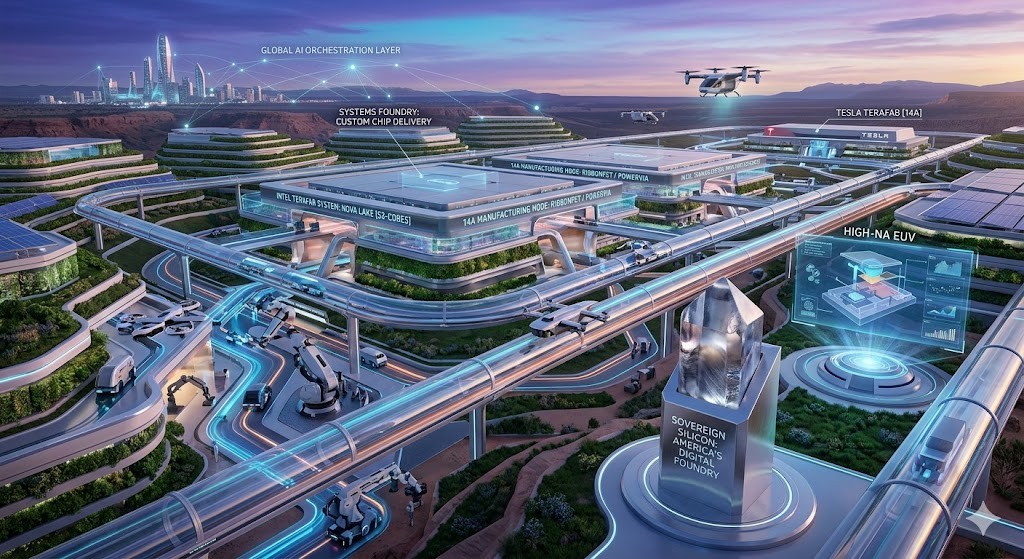
Under the leadership of CEO Lip-Bu Tan, Intel is executing a high-stakes transformation to reclaim its position as a global leader in semiconductor manufacturing. The company is moving away from its traditional model toward a “systems foundry” approach, where it opens its state-of-the-art factories to external customers like Apple, Tesla, and Amazon. Central to this strategy is the “five nodes in four years” roadmap, culminating in the high-volume production of the 18A (1.8nm) and 14A (1.4nm) nodes. These advanced processes introduce game-changing technologies like RibbonFET, which provides better control over electricity flow to reduce power leakage, and PowerVia, a world-first technique that moves power delivery to the back of the chip. This restructuring of the chip’s “plumbing” allows for better performance and cooling, creating a massive technical advantage as the industry shifts toward hardware capable of supporting complex, autonomous AI agents.
To fund this massive $100 billion expansion, Intel has implemented aggressive financial discipline, including cutting approximately 30,000 jobs and pausing dividends to prioritize capital for its new “Terafabs.” These efforts are already showing results; the U.S. government’s strategic 10% stake in the company has generated a $35 billion unrealized gain, effectively turning Intel into a protected national asset and a “sovereign” alternative to overseas foundries. On the consumer side, Intel is returning to a yearly release cadence with its upcoming Nova Lake platform in late 2026, which is expected to feature a record-breaking 52-core architecture to leapfrog competitors in raw processing power. By combining its manufacturing “factory for the world” vision with cutting-edge CPU designs, Intel is positioning itself as the indispensable backbone for the next era of global digital infrastructure.
The Power Behind the AI Revolution: Why TeraWulf (WULF) is Dominating 2026
The era of “Software-only AI” is over; we have officially entered the age of Physical AI infrastructure, and TeraWulf (WULF) is sitting at the center of this massive shift. While traditional data centers are struggling with surging energy costs and carbon footprints, TeraWulf is leveraging its zero-carbon energy pipeline to power the next generation of high-performance computing (HPC). By pivoting from pure-play Bitcoin mining to hosting massive AI model training at facilities like Lake Mariner, they’ve secured a critical “picks and shovels” position in the digital gold rush. Investors are piling in as the company proves that owning the power is just as valuable as owning the code, driving a year-to-date surge that has outpaced nearly every other player in the mining-to-AI transition.
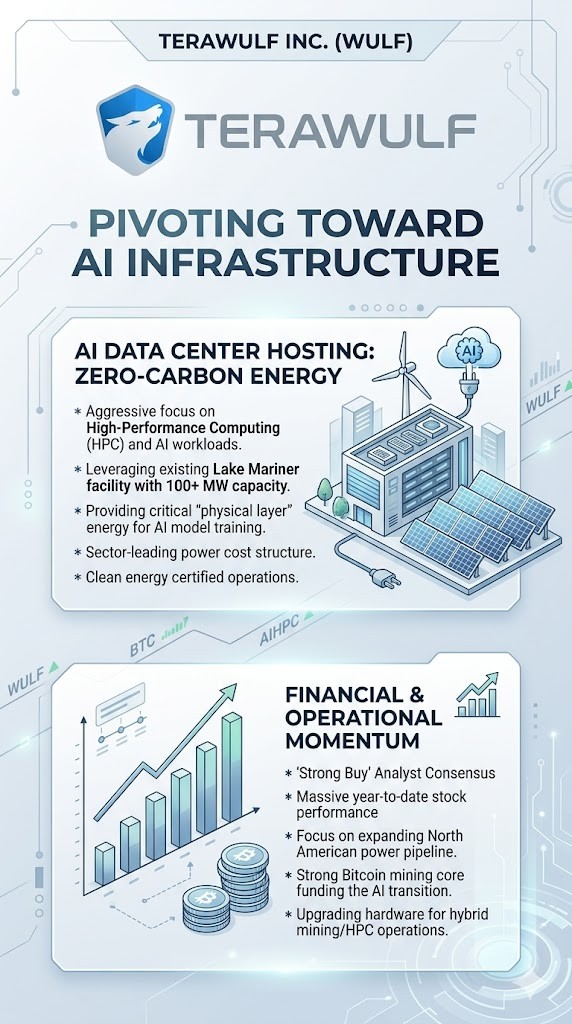
This isn’t just a speculative hype cycle—it’s a fundamental repricing of energy-rich assets. TeraWulf’s strategic advantage lies in its ability to offer massive scalability with a sector-leading power cost structure, making it an essential partner for the hardware-heavy demands of agentic AI and autonomous systems. With a “Strong Buy” analyst consensus and a rapidly expanding North American power footprint, WULF has become the high-conviction play for those looking beyond the chipmakers to the infrastructure that actually keeps the lights on. As we approach the mid-year mark, all eyes are on their ability to scale their hybrid mining-and-HPC model, cementing their status as a foundational pillar of the 2026 Growth Radar.
🚀 Hyper-Growth Alert: Rezolve AI’s Retail Revolution
Rezolve AI is a company that uses artificial intelligence to help businesses sell products online more easily. Its technology allows companies to use AI tools (like chat or automation) to improve customer experience and increase sales. In 2025, the company made strong revenue growth, which is why the stock is getting attention from investors. It also expects to grow even faster in 2026, showing confidence in its future. Many businesses are already using its platform, which is a good sign. However, the stock can go up and down quickly because it is still a high-growth and early-stage company.

Rezolve AI has shown rapid growth in revenue over the past two years. In 2024, its revenue was very small, around $188,000, as the company was just starting its commercial operations. By 2025, revenue jumped dramatically to an estimated $40 million, with December 2025 alone expected to bring in over $17 million. The company also ended 2025 with Annual Recurring Revenue (ARR) above $200 million, reflecting steady long-term contracts. Looking ahead, Rezolve AI has guided that 2026 revenue could reach $350 million with an ARR of $500 million, signaling strong adoption of its AI-powered eCommerce platform by enterprise clients and highlighting its rapid growth trajectory, although the stock remains volatile as the company continues scaling.