
 Written by
 Operation Epic Fury: How Gulf Escalation Shakes Oil, Stocks, and Global Markets
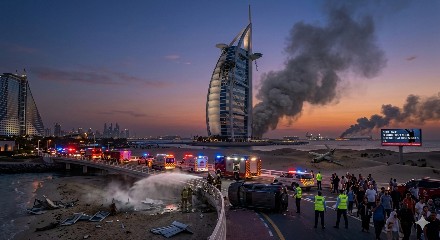
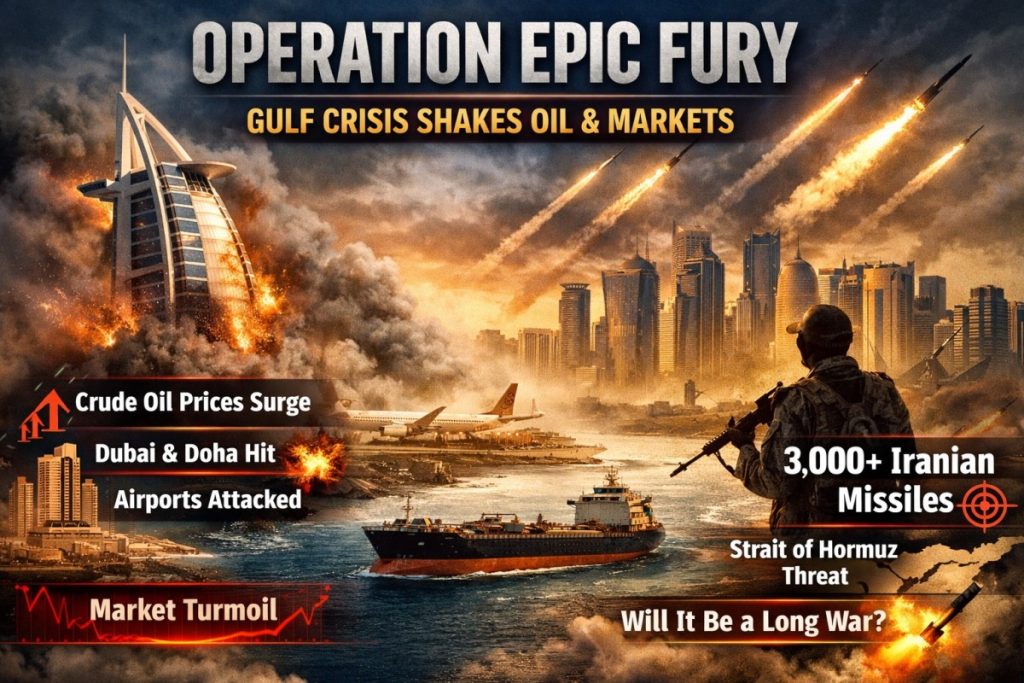
Global financial markets entered a period of heightened volatility immediately after the launch of Operation Epic Fury, a major military escalation involving Iran. Investors rapidly reassessed exposure to energy supply routes, regional infrastructure, and commercial hubs across the Gulf. Reports confirmed that high-profile sites were directly affected — including damage to the Burj Al Arab and operational disruptions at Dubai International Airport. Heightened security alerts in Doha reinforced fears that the conflict could spill over, affecting commercial and financial activities. The immediate market response embedded a geopolitical risk premium across energy, equities, and safe-haven assets.
Operation Epic Fury: Oil Markets React Instantly
Energy traders moved decisively as soon as news broke. Crude oil prices surged as participants priced in potential supply disruptions, even before confirmed interruptions. The Gulf region remains critical to global petroleum flows, so any military escalation automatically increases market sensitivity. Traders added a risk premium to Brent and WTI contracts, driving sharp gains within hours.
Even without direct production shutdowns, the threat of disruption impacts shipping insurance, tanker routing, and freight rates. As a result, costs ripple across the supply chain, influencing fuel prices and broader inflationary expectations worldwide.
Operation Epic Fury: The Strait of Hormuz — The Choke Point
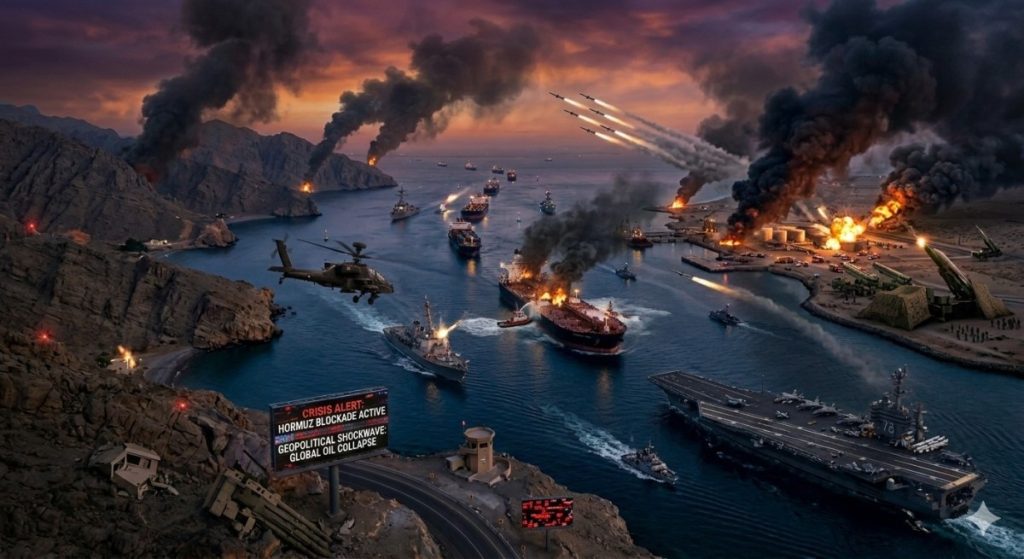
At the heart of market concern lies the Strait of Hormuz, a narrow corridor through which roughly 20% of global oil consumption transits daily. No viable alternative exists to carry comparable volumes, so even partial disruption can tighten supply rapidly.
Markets react in stages: traders add a risk premium, insurers increase premiums for vessels, and freight costs rise, affecting downstream industries. This sequence shows why price spikes occur even without a full closure. Investors understand that in the Gulf, threat perception alone drives energy market volatility.
Operation Epic Fury: Regional Infrastructure Risks — Dubai and Doha
While energy dominates headlines, commercial infrastructure was directly hit, highlighting broader economic risk.
In Dubai, retaliatory missiles and drones damaged parts of the Burj Al Arab and affected operations at Dubai International Airport. Four people were injured by debris from intercepted attacks, while flights faced temporary suspension. Emirates and other carriers rerouted traffic, disrupting international passenger and cargo flows.
Similarly, in Doha, Qatar Airways temporarily suspended flights due to airspace restrictions, illustrating that nearby Gulf hubs can experience severe disruption even without direct strikes.
These developments show that markets are pricing more than oil risk:
- Tourism revenue: Iconic hotels and safe-airport access support high-margin tourism; damage and flight cancellations threaten bookings.
- Aviation and logistics: Dubai and Doha are global air transit hubs; operational interruptions ripple through global supply chains.
- Investor confidence: Damage to economic hubs increases perceived regional risk, potentially deterring commercial investment.
In short, markets are reacting to regional business continuity risks, not only energy supply risks.
Operation Epic Fury: Equity Markets Sector Rotation Accelerates
As oil climbed, equities rotated sharply. Energy producers and defense contractors attracted capital, benefiting from higher crude prices and anticipated military spending.
Conversely, airlines, travel operators, and hospitality companies faced selling pressure. Rising fuel costs and security concerns weighed heavily on profit forecasts. Technology and growth stocks experienced volatility as investors shifted toward more defensive, cash-flow-stable positions.
Portfolio managers actively reallocated capital, reflecting risk management rather than panic. Broader indexes experienced swings as market participants adjusted exposures across sectors.
Operation Epic Fury: Inflation and Central Bank Implications
Oil price surges rarely remain confined to the energy sector. Higher crude prices raise transportation, manufacturing, and consumer goods costs globally. Sustained increases could push inflation higher, complicating central bank policies aimed at balancing growth and price stability.
Bond yields may rise if investors anticipate persistent inflation, while currencies of emerging markets may face additional stress. GCC economies pegged to the U.S. dollar experience some insulation, but they remain exposed through capital flows and investor sentiment.
Operation Epic Fury: Scenario Analysis
Investors are modeling three main outcomes:
- Contained Escalation: Military action remains localized; shipping through Hormuz continues. Oil prices may stabilize, and equity markets could retrace initial volatility.
- Prolonged Tension: Incidents continue near airports, hotels, and ports, keeping oil elevated and sustaining equity volatility. Insurance and logistical costs remain high.
- Shipping Disruption: Tanker traffic through Hormuz is significantly impaired. Oil prices spike, global growth slows, and inflationary pressures intensify. Central banks may face challenging policy decisions.
Currently, markets operate somewhere between contained escalation and prolonged tension, reflecting uncertainty about duration and spread.
Operation Epic Fury: Gulf Economies’ Dual Forces at Play
Higher oil prices provide short-term fiscal relief for exporters, boosting government revenues. However, those gains may be offset by reduced tourism, aviation disruptions, and cautious foreign investment.
Dubai and Doha have diversified heavily into finance, real estate, and global services. Sustained instability challenges that strategy, raising selective pressure on regional equity markets despite elevated energy income.
Operation Epic Fury: Investor Positioning, Hedging and Caution
Institutional investors are not abandoning markets but hedging exposure. Commodities and defensive equities are favored, while high-beta assets are trimmed. Volatility indices have risen, reflecting caution rather than panic.
This measured response shows that markets actively manage geopolitical risk, not react blindly to headlines.
Operation Epic Fury: Iran’s Ballistic Capabilities in Focus
Iran has developed one of the largest and most diverse ballistic missile arsenals in the Middle East, and this capacity plays a central role in its strategy amid Operation Epic Fury. According to multiple defence analyses, Iran’s stockpile includes thousands of missiles across short, medium, and long ranges, making it a formidable regional missile power.
A U.S. intelligence assessment has long indicated that Iran possessed a substantial ballistic inventory. Estimates from recent years suggested Iran maintained more than 3,000 missiles before the onset of major regional conflicts, although some have been expended during previous rounds of hostilities and targeted strikes on storage and production sites.
The arsenal includes a variety of missile types, each capable of reaching different target sets:
- Short‑Range Ballistic Missiles (SRBMs): These include systems like the Shahab‑1 and Fateh‑110 families, typically ranging up to a few hundred kilometres. They are mainly used against neighbouring targets and in regional theatres.
- Medium‑Range Ballistic Missiles (MRBMs): Missiles such as the Shahab‑3, Emad, and Ghadr variants have ranges from roughly 1,000 km to 2,000 km, bringing major regional capitals, airbases, and military infrastructure well within reach.
- Long‑Range Systems: Some variants like the Sejil family have been developed for longer ranges and more advanced guidance, potentially extending the reach well into broader regional theatres.
Iran has also invested in underground “missile cities” and hardened storage facilities to protect its arsenal from airstrikes. These underground complexes in provinces like Semnan and Kermanshah are designed to increase survivability and allow Iran to sustain missile operations even under sustained aerial pressure.
Given these capabilities, Iranian forces have repeatedly used ballistic missiles in past conflicts — for example, firing volleys during clashes with Israel in 2025 — and they retain significant capacity to launch further strikes if the conflict continues.
Will It Be a Long War? Analysts Weigh In
Whether Operation Epic Fury evolves into a prolonged war depends on multiple strategic, military, and diplomatic variables. As of early reporting, Iran has vowed sustained retaliation against strikes and has already launched missiles and drones at multiple targets in the region in response.
Several factors point toward a potentially extended conflict rather than a short skirmish:
Iran’s Determination to Respond
Iran’s leadership has publicly framed its retaliatory actions as part of a longer campaign rather than isolated counter‑strikes. Statements from Tehran and regional proxies have emphasized continued resistance against foreign incursions, suggesting that Iran will not capitulate quickly.
Robust and Dispersed Missile Stocks
The fact that Iran maintains a large, diversified ballistic missile inventory — including hardened underground storage sites — means it can sustain firing over time, even if some assets are destroyed or expended. This makes a quick military collapse less likely than a drawn‑out strategic exchange.
Proxy Networks and Regional Allies
Iran has cultivated deep alliances with militias and armed groups across the region (including in Iraq, Lebanon, Yemen, and Syria) that can extend the conflict footprint and complicate any rapid resolution. These groups have their own rockets and missiles, which Iran can help coordinate or supply.
Regional Security Dynamics
Major powers such as Russia and China have expressed concern over escalations, and some have condemned Western strikes, urging de‑escalation through diplomatic channels. This international pressure could push the conflict away from full‑regional war but also make a swift end unlikely without negotiated terms.
At the same time, several arguments suggest the conflict might not settle into full‑scale long‑term war:
- Mutual deterrence: Regional actors, including Israel and the U.S., have significant defensive capabilities such as missile interceptors, which can blunt large salvo attacks and reduce incentives for open escalation.
- Economic pressures: Protracted warfare would create severe economic stress for Iran — already facing sanctions and fiscal strain — which could incentivize strategic restraint or negotiated pause.
Therefore, many analysts believe the conflict has the potential to transition from short, intense spikes of military exchange into a prolonged period of low‑to‑medium intensity engagements rather than a classic, extended total war.
Impact on Markets: Longer Horizon Uncertainty
If the conflict persists over months rather than weeks:
- Crude oil markets may continue to price in elevated risk premiums, sustaining higher price levels as traders discount prolonged supply uncertainty.
- Equity volatility may remain elevated, particularly in sectors sensitive to geopolitical risk — energy, airlines, and travel.
- Safe–haven flows into gold and government bonds are more likely to stay strong as investors seek stability amid sustained uncertainty.
In contrast, if diplomatic pressures lead to a negotiated stand‑down or regional de‑escalation, markets could reverse some of the risk premia quickly.
Final Take: Still Drives Markets
Operation Epic Fury highlights a fundamental truth: geography continues to shape global finance. The Gulf — from iconic hotels in Dubai, airports, to the Strait of Hormuz — anchors vital energy and trade networks.
Until clear signs of de-escalation emerge, oil markets will likely remain sensitive, equity rotations will continue, and investors will embed a persistent geopolitical risk premium. Tanker traffic, airport operations, and regional business continuity will drive price action, not speculation alone.
Markets are adjusting rapidly, reflecting the interconnectedness of geopolitics, energy, and global economic flows.