
 Written by
 Silver and Gold in a High-Tech World: Where They Remain Irreplaceable
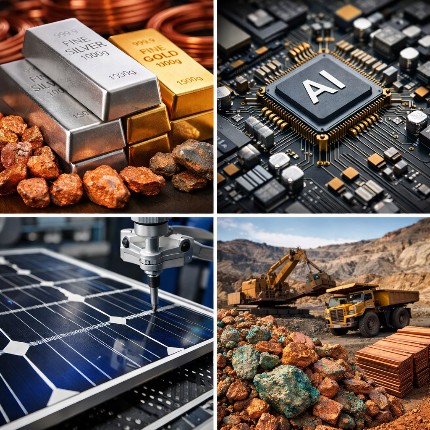
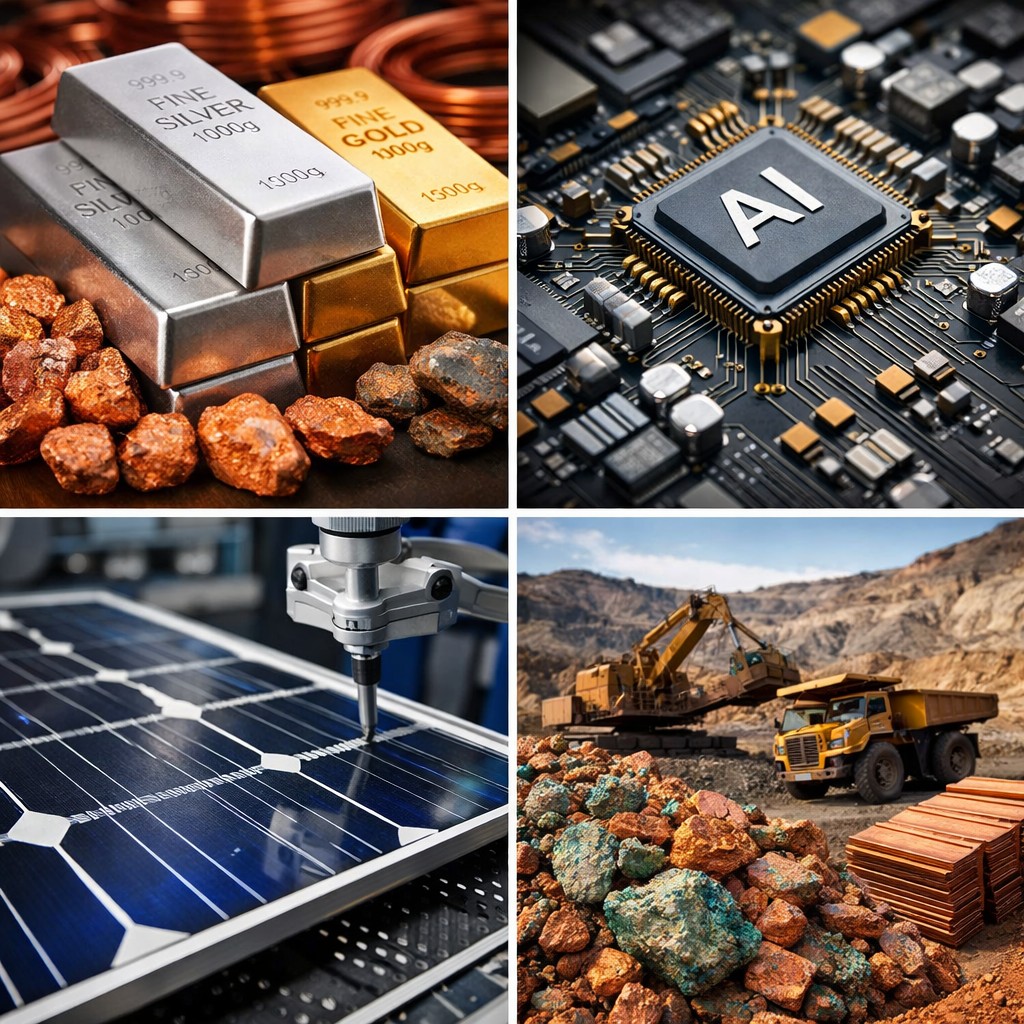
For thousands of years, gold and silver symbolized wealth through money, jewelry, and ornamental use. Today, their most crucial role is no longer decorative—it is technological. These metals power AI data centers, solar panels, aerospace systems, and advanced medical devices, sitting at the intersection of physics, efficiency, and reliability.
Yet the landscape is shifting. As global technology scales and cost pressures mount, engineers face a critical question: where are gold and silver truly irreplaceable, and where can alternatives deliver acceptable performance at a lower cost? The answer is reshaping supply chains, industrial demand, and long-term investment strategies across the metals sector.
Silver: The Ultimate Efficiency Metal
Silver is not just another industrial metal. It is the most electrically conductive, thermally conductive, and optically reflective metal known to science. This unique combination makes it indispensable in applications where efficiency is measured in fractions of a percent.
In compact, high-frequency systems operating under intense heat, even minor losses can cause signal degradation, excess heat, or total system failure. Engineers rely on silver in miniaturized electronics, AI accelerators, data-center processors, 5G/6G infrastructure, radar, and sensing systems.
While copper comes close, in these extreme conditions, “close” is not enough. Fractional drops in conductivity can slow signals, generate excess heat, and compromise reliability. In AI hardware, where trillions of calculations occur every second, efficiency is non-negotiable. This necessity keeps silver in specialized interconnects, bonding materials, and advanced coatings—even as manufacturers reduce overall usage.
Solar Panels: A Turning Point for Silver
Solar energy has become a defining driver of silver demand. For decades, silver paste in photovoltaic cells delivered unmatched conductivity, adhesion, and durability, supporting long-lasting outdoor performance. As solar adoption exploded, it became silver’s largest industrial demand source.
However, rising silver prices and cost pressures have prompted innovation. Leading solar producers such as LONGi and AIKO now mass-produce ultra-low-silver or silver-free solar cells, substituting copper through advanced electroplating combined with protective surface treatments.
Yet silver is not disappearing. Copper-based designs require complex manufacturing, tighter quality control, and protective layers. In premium, high-efficiency panels—especially in space, defense, or constrained environments—silver remains the preferred material. The trend represents a turning point, not elimination, as increasing global installations offset reduced silver per panel.
Electronics: Cost, Performance, and Reliability
In electronics, metal choice follows a hierarchy. Copper dominates mass-market products due to cost efficiency, availability, and sufficient performance. Smartphones, laptops, household appliances, and automotive electronics primarily use copper, where peak performance is secondary.
Silver enters only when performance truly matters: high-frequency connectors, precision switches, RF shielding, and advanced sensors. Its superior conductivity justifies the premium.
Gold plays a distinct role. Its resistance to tarnish ensures reliability in aerospace, military, and medical systems, including satellite connectors, missile guidance, avionics, and implantable devices. Gold’s value lies in long-term reliability under extreme conditions, not peak conductivity.
Medical and Biotech Applications
Both metals hold critical positions in modern medicine. Silver’s antimicrobial properties make it essential for wound dressings, surgical instruments, hospital surfaces, and water purification systems, especially amid rising antibiotic resistance.
Gold supports advanced healthcare applications, offering biocompatibility and chemical stability in cancer treatments, diagnostic imaging, biosensors, and implantable electronics. In medicine, long-term safety outweighs cost considerations.
AI, Defense, and Space: Irreplaceable Roles
Some sectors tolerate no compromise. AI chips, defense systems, and aerospace equipment operate under extreme conditions where heat, signal loss, or latency are existential risks. Silver manages interconnects and packaging, while gold secures critical signal paths. Replacing them entirely demands breakthroughs in physics, not incremental engineering.
In these high-stakes applications, copper or aluminum cannot compete. Silver and gold ensure predictability, stability, and proven performance where failure is unacceptable.
Silver Prices Today and Rebound Potential
Despite its technological relevance, silver recently fell amid short-term market pressures. Its dual role as an industrial metal and financial asset creates volatility. Price dips often reflect profit-taking, currency swings, and macroeconomic shifts rather than changes in real-world demand.
Long-term, industrial demand—solar, AI hardware, advanced electronics, and medical technologies—supports silver. Substitution occurs only where minor performance compromises are acceptable. In high-value applications, silver’s role remains secure, while constrained supply reinforces its strategic importance.
Hycroft Mining: A Major Silver & Gold Development Story
Hycroft Mining Holding Corporation is a U.S.-based precious metals development company focused on the Hycroft Mine in northern Nevada, one of the world’s largest gold and silver deposits. The project hosts significant resources—over 10.6 million ounces of gold and 361 million ounces of silver in the measured and indicated category, with additional inferred resources still to be fully explored.
Unlike producers focused on near‑term output, Hycroft is advancing its exploration and development programs to unlock high‑grade silver systems at depth, including the Vortex and Brimstone zones, which have returned exceptionally high silver grades in recent drilling campaigns.
Copper’s Rise and Hindustan Copper Performance
As silver exits cost-sensitive applications, copper emerges as the backbone of global electrification. It powers renewable energy infrastructure, electric vehicles, charging networks, and mass-market electronics. This trend is evident in copper producers’ market performance.
Hindustan Copper’s stock has surged across time frames, reflecting growing copper demand. Gains range from 29% in a single week to over 1,299% across ten years. In the past ten months alone, the stock climbed more than 300% from its 52-week lows, fueled by strong copper pricing, investor interest, and strategic expansions in new mining blocks.
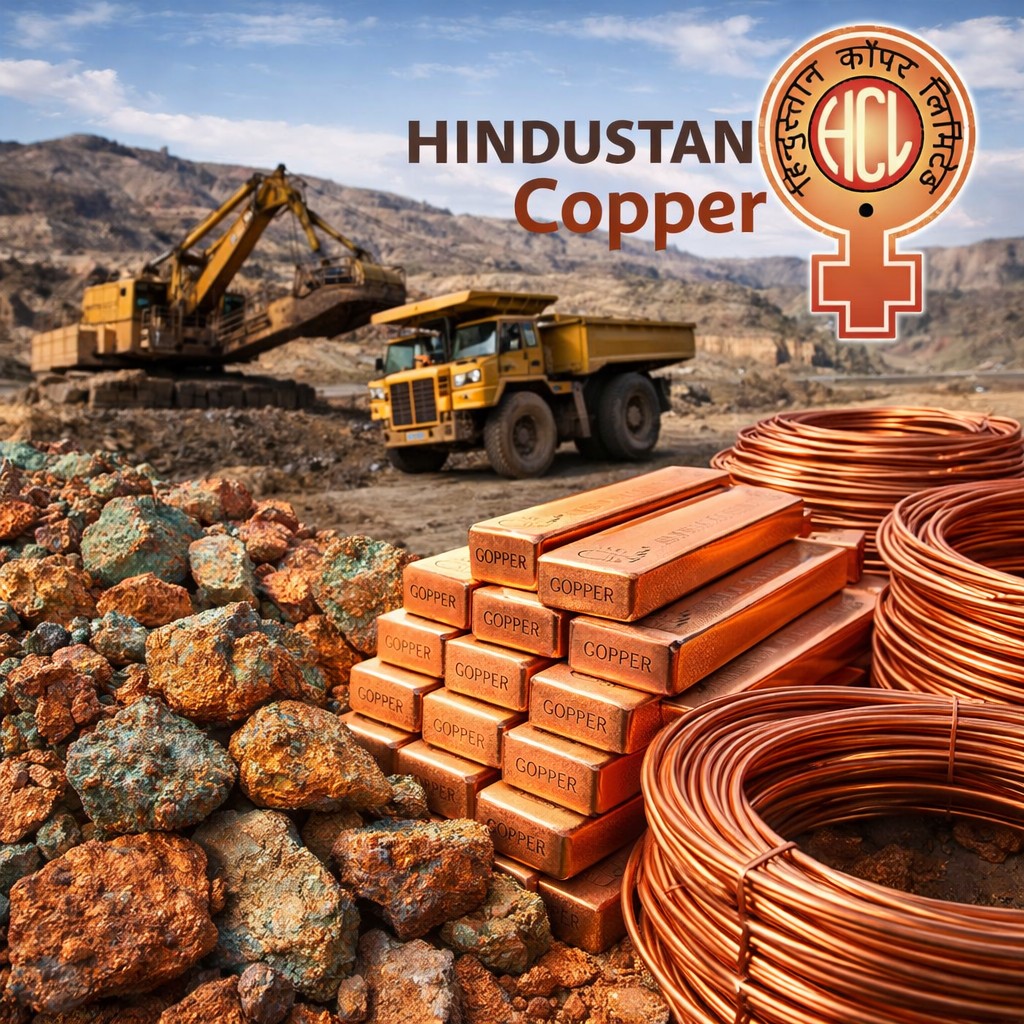
Short-term rallies often exceed 40% in a week, demonstrating how cyclical metals markets amplify equity returns during commodity price upswings. Over longer periods, Hindustan Copper’s performance highlights copper’s structural demand tied to electrification, renewable energy, and infrastructure—contrasting with silver’s volatility influenced by both industrial use and investor positioning.
Scarcity Meets Strategy
Gold and silver have evolved beyond commodities—they are strategic metals. As AI, renewable energy, defense, and advanced medicine scale globally, the question is not whether these metals will be used, but where they will be reserved.
In a world prioritizing efficiency, miniaturization, and resilience, gold and silver are more selective, concentrated, and critical where it matters most. Meanwhile, copper, exemplified by Hindustan Copper, is thriving in the infrastructure-driven, electrified economy.