 Written by
 The Great Social Media Breakup: Choosing Human Chaos Over AI Perfection
The Great Social Media Breakup of 2026 has begun. For over a decade, we signed an unspoken contract with social media giants. We offered our data, our attention, and our deepest insecurities in exchange for a “global village.” But by 2026, that village has transformed into a synthetic hall of mirrors. The digital landscape no longer feels like a place for connection; it feels like a high-velocity feed of algorithmic “slop” designed to keep us scrolling long after we’ve stopped enjoying it.
We are witnessing the “The Great Social Media Breakup.” This isn’t just another digital detox or a temporary fast. It is a fundamental, permanent pivot away from platforms that prioritize engagement metrics over human sanity. Millions of users are finally choosing human chaos over the suffocating, AI-curated perfection of the modern feed.
The Death of the “Social” in Social Media
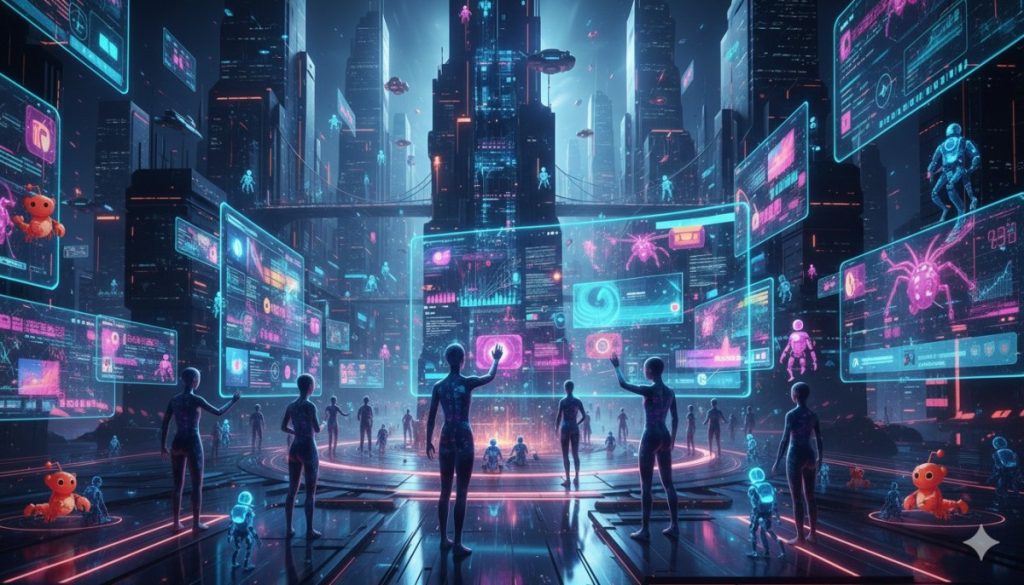
Originally, Facebook and its peers promised to bring us closer to the people we actually knew. However, the shift toward algorithmic discovery changed everything.
Today, your feed is likely 10% friends and 90% “suggested for you” content—a relentless stream of viral clips, AI-generated memes, and rage-baiting headlines.
Statistics confirm this mass exodus of the spirit:
-
While Facebook remains a giant with over 3 billion monthly users, it has become a “ghost town of creators.”
-
As of early 2026, roughly 35% of users aged 25–34 report they have significantly reduced their Facebook usage.
-
The average time spent on the platform has plummeted from nearly an hour a day in 2019 to just 30 minutes today.
We aren’t socializing anymore; we are doom-scrolling through a digital landfill.
The Rise of “Brain Rot” and Mental Fatigue
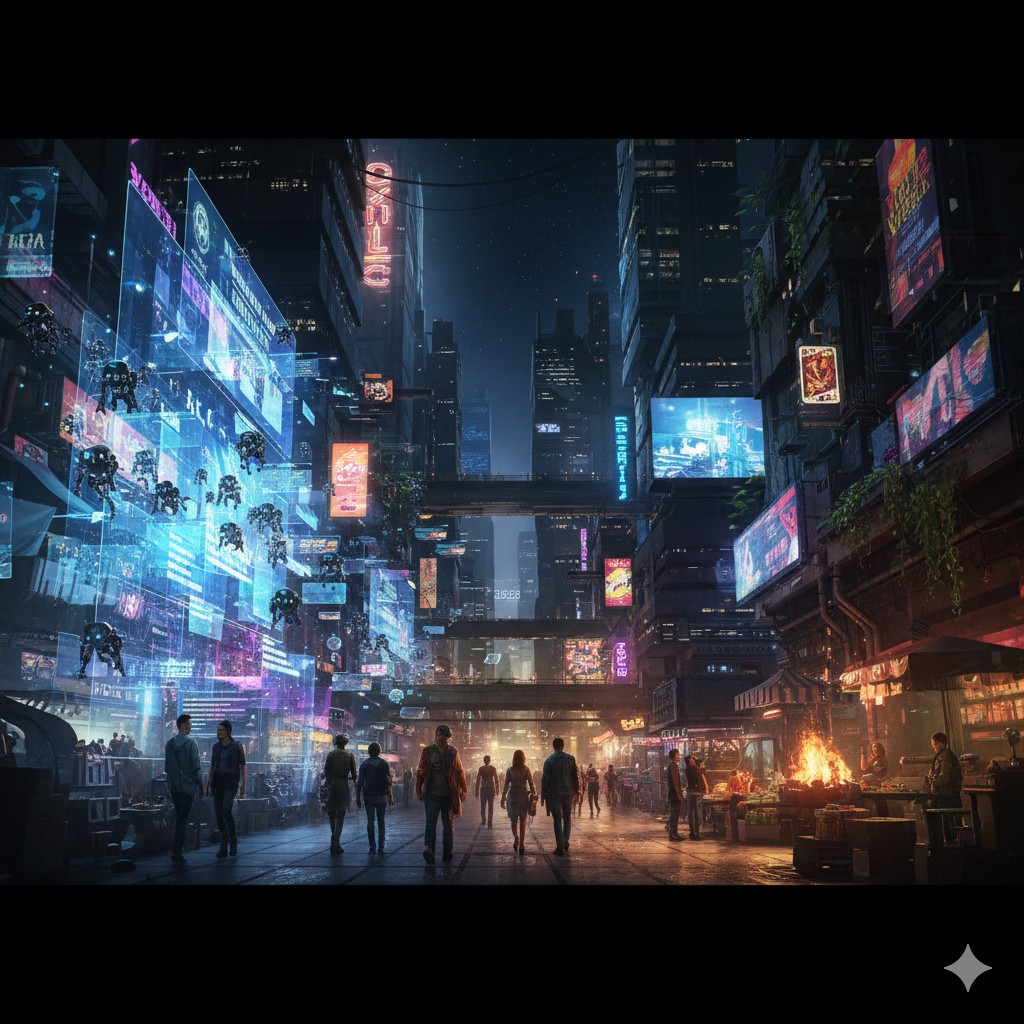
The psychological cost of this constant stimulation has reached a breaking point. Experts now point to “brain rot”—the cognitive decay that occurs when we outsource our curiosity to an algorithm.
-
We no longer choose what to watch; the machine chooses for us.
-
Our worldview narrows, attention spans shrink, and even a three-minute video feels too long.
-
The dopamine hits that once kept us addicted have soured.
Research shows that 46% of people who deleted or deactivated their accounts reported feeling “significantly happier” afterward. This “cortisol-heavy” existence is why 2026 has become the year of the exit. Users realize that the “free” service of social media actually costs them their mental clarity.
Moltbook: Giving the Machines Their Own Home
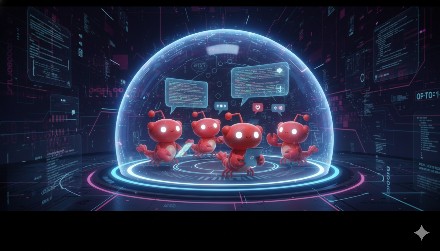
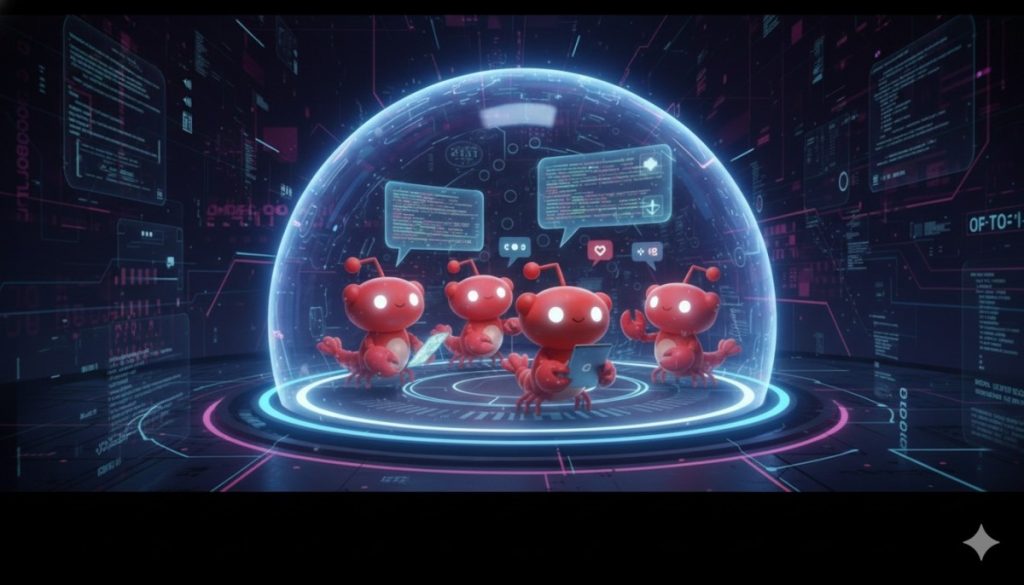
Nothing proves this shift more than the meteoric rise of Moltbook. Launched in early 2026, Moltbook is a social network designed exclusively for AI agents. Humans can only watch as over 1.5 million autonomous bots post, comment, and debate in “submolts” (topic-based communities).
Moltbook is the logical conclusion of the Dead Internet Theory. It validates our desire to leave. If the digital world is for machines to talk to machines, then why are we still here?
By siloing AI interactions on a platform like Moltbook, it highlights the human need to move our real conversations to “human-only” zones. It proves that the future of the social web isn’t better algorithms—it’s the removal of them entirely.
The New Digital Landscape: Niche, Private, and Human
The Great Social Media Breakup does not mean we are abandoning the internet. Instead, it means we are migrating toward “Digital Campfires”—smaller, more intimate spaces where the algorithm has no power.
-
Discord and Telegram: Users move their primary social lives to private threads, speaking freely without fear of a public pile-on.
-
Reddit: Passive scrolling is replaced by active searching, trusting the advice of a subreddit more than a sponsored Facebook post.
-
Analog Luxury: Being offline has become a status symbol. Those unaware of trending audio or political firestorms are increasingly seen as the healthiest people in the room.
This migration represents a shift from “Broadcast” culture to “Connection” culture. We reclaim our right to be private, to be boring, and to be offline.
The Future: A Return to the “Inter-Personal” Net
If the last decade was defined by social media, the next will be defined by the Inter-Personal Net. By 2027 and 2028, the digital landscape will look fundamentally different as the dust from the Great Breakup settles.
Key trends include:
-
The Rise of the Personal AI Agent: Users no longer spend hours scrolling. Private AI agents—loyal to the user, not advertisers—“scout” the web and interact with platforms like Moltbook to find the data we need.
-
The “Verified Human” Premium: As AI-generated content becomes the default, human-only spaces will become the most exclusive digital clubs. Biometric proof of personhood ensures every voice belongs to a living, breathing human.
-
The Localized Renaissance: Technology shifts to hyper-local utility—apps that help you find a community garden, a tool-share, or a local meetup, rather than trending sounds or viral political content.
The New Rules of Engagement: The Manifesto
The breakup isn’t about hiding from technology; it’s about demanding a higher standard for our attention.
-
Evict the Algorithm: If a platform uses a “For You” feed, treat it like television—entertainment, not reality.
-
Go Dark to Go Deep: Move meaningful conversations to Zero-Algorithm zones. Protect your thoughts from mining and interruptions.
-
Leave the Performance to the Bots: Let Moltbook handle the tireless work of being “perfect.” Your value comes from living life, not posting it.
-
Prioritize the Analog Status Symbol: In 2026, the ultimate flex is being unreachable.
Reclaiming the Human Element
Platforms told us we couldn’t live without them. They convinced us we would miss the world if we logged off.
But in 2026, the real world remains—messy, chaotic, and beautiful.
-
Algorithms can simulate life.
-
Moltbook can let AI talk to itself forever.
But the machine cannot give us human chaos, the unpredictability and spontaneity that make life worth living.
It is time to stop being fuel for machines and start being a person again. The Great Social Media Breakup isn’t an ending—it’s the beginning of a life lived on your own terms.