
 Written by
 The Hormuz Red Sea Squeeze: A 2026 Market Reckoning
The early 2026 oil market enjoyed a brief calm, but that calm shattered this week as the “War Premium” returned with a vengeance. Global oil inventories had been rising, creating a false sense of security, until a US-led ultimatum to Iran coincided with the Houthis’ deployment of advanced ballistic missiles. This convergence created an unprecedented dual-chokepoint crisis, with the Strait of Hormuz and the Bab el-Mandeb simultaneously at risk. Traders monitor this trend closely as live oil prices spike, reflecting the immediate impact of the Hormuz Red Sea Squeeze, while investors are also watching the trend in Bitcoin price USD and tracking ‘cartel war’ in Mexico, seeking alternative assets amid rising geopolitical and market uncertainty.
Houthis Move Beyond Drones
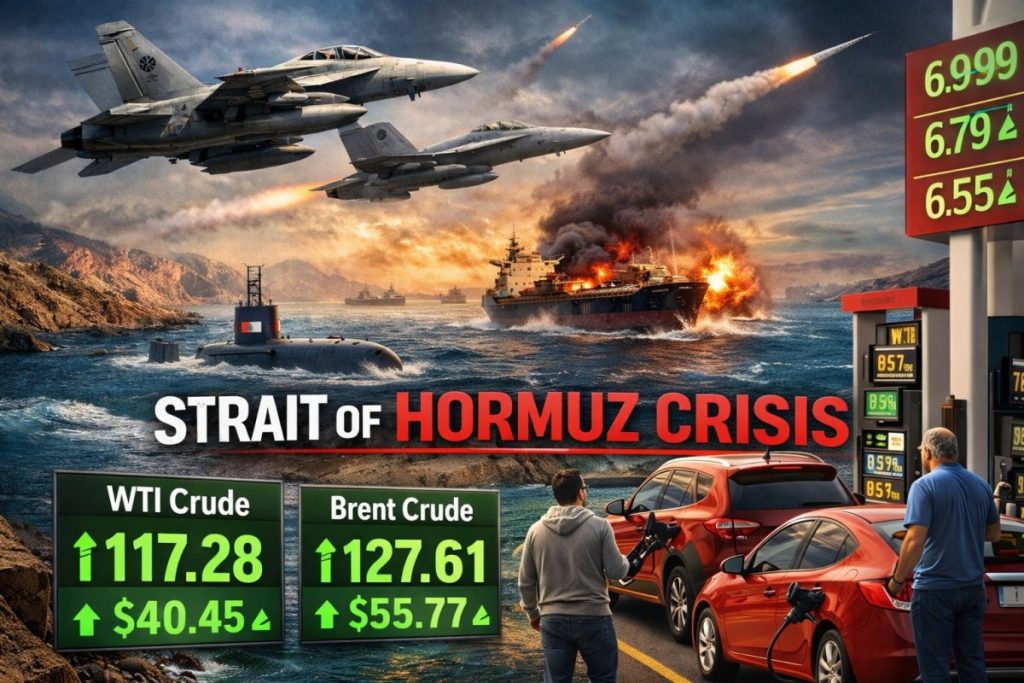
The market no longer fears small-scale drone attacks alone. By February 2026, the Houthis integrated Iranian-supplied Anti-Ship Ballistic Missiles into their arsenal. These missiles reach targets at hypersonic speeds from the upper atmosphere, leaving naval escorts only seconds to react.
On February 16, a Houthi missile narrowly missed a commercial tanker, signaling that the multinational Operation Prosperity Guardian naval coalition operates at the edge of its limits. Search interest in terms like “Aegis Interceptor Success Rates” and “Houthi missile inventory” spiked as traders calculated the probability of stopping a missile strike on a major crude carrier. This evolution from drones to ballistic missiles demonstrates how quickly the risk environment escalates in strategic maritime chokepoints.
US Ultimatum and the Risk Window
Escalation now hinges on Washington. Intelligence leaks indicate that the Trump administration issued a 48-hour ultimatum demanding Iran freeze missile exports and halt nuclear enrichment. Analysts label late February as a high-risk window, warning that military action could begin immediately if Tehran ignores the deadline.
The US deployed its largest naval buildup in the region since 2003. The USS Abraham Lincoln patrols the Arabian Sea, and the USS Gerald Ford accelerates its transit to join the carrier strike group. Analysts anticipate a multi-week campaign targeting Houthi launch sites in Yemen. If the US strikes, Iran could retaliate immediately by mining or closing the Strait of Hormuz, threatening global oil flows.
The Strait of Hormuz and the Oil Shock
If Iran acts on its threat to close the Strait, the squeeze becomes absolute. Brent crude currently hovers near seventy-two dollars per barrel, but the market underestimates the supply shock. Analysts highlight the math: millions of barrels trapped in the Gulf would create a massive supply deficit.
Investors search for alternatives like the East-West Pipeline in Saudi Arabia and ADCOP in the UAE. These pipelines together move only a fraction of the trapped volume, leaving most barrels stranded. Analysts project Brent could spike to one hundred forty to one hundred fifty dollars per barrel within days.
Investors now distinguish between “risk oil” in the Middle East and “safe oil” elsewhere, revaluing assets that bypass chokepoints.
Iran Tests the Sayyad Missile
Adding to market volatility, Iran tested a new naval air defense missile during military drills in the Strait of Hormuz. The Islamic Revolutionary Guard Corps Navy launched it for the first time during the “Smart Control of the Strait of Hormuz” exercise. The missile adapts the land-based system for ship launch, reaching approximately one hundred fifty kilometers from vertical launch systems.
This test signals Tehran’s enhanced capacity to control and defend strategic maritime chokepoints, further heightening the stakes for global oil flows as the US continues its military buildup.
Potential Iranian Retaliation Targets
If the US strikes Houthi or Iranian positions, Iran could retaliate across the Middle East. Analysts identify several likely targets:
-
Al Udeid Air Base, Qatar – The largest US installation in the region and forward headquarters for US Central Command. Iran has previously fired missiles at this base, making it both symbolic and operationally significant.
-
Airbases in Iraq and Jordan – Facilities such as Muwaffaq Salti Air Base and US bases in Iraq could see missile or drone strikes, disrupting US operations.
-
Gulf States Hosting US Forces – Bases in Bahrain, Kuwait, Saudi Arabia, and the UAE fall within Iran’s strategic range. Tehran classifies these sites as legitimate targets in retaliation.
-
Israeli and Allied Facilities – Iran may target infrastructure aligned with US operations, relying on proxies across Iraq, Syria, Lebanon, and Yemen to extend its operational reach.
These developments create a multilayered risk environment for both oil supply chains and regional security.
Stocks Poised to Jump Amid the Squeeze
The market already rewards companies positioned to benefit from chokepoint risk, defense spending, and alternative energy sources.
Missile Defense and Aerospace
-
Lockheed Martin – Benefits from Aegis and THAAD missile defense deployments.
-
Raytheon Technologies – Supplies SM-6 and PAC-3 systems protecting shipping lanes and bases.
-
Northrop Grumman – Leads in missile guidance and autonomous threat-tracking systems.
Energy Infrastructure and Safe Oil Producers
-
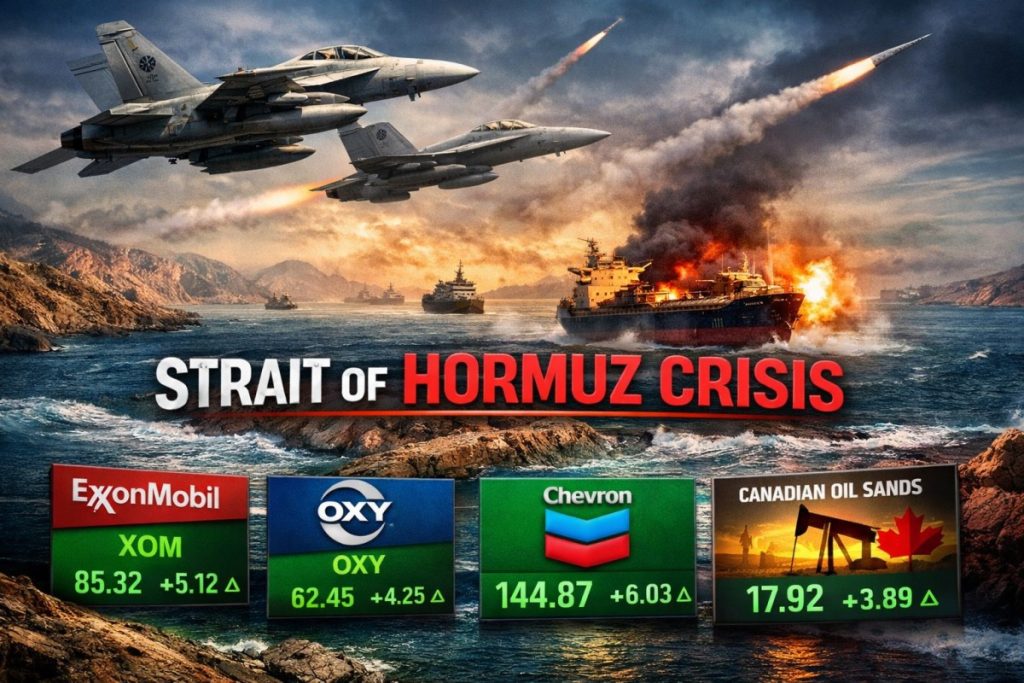
Exxon Mobil and Chevron – Diversified portfolios bypass Middle Eastern chokepoints.
-
Occidental Petroleum – Major US shale and Permian Basin operator, providing reliable production in a crisis.
-
Canadian Oil Sands Producers – Deliver oil via pipeline, avoiding risky maritime routes.
-
Guyana-focused producers – Stable production in politically secure regions.
Uranium and Nuclear Energy
-
Cameco – Major uranium miner, gaining as markets seek energy security.
-
Sprott Uranium Miners ETF – Diversified uranium exposure.
-
Energy Fuels Inc. – Provides strategic nuclear fuel in North America.
Maritime Insurance and Shipping Risk Plays
-
Maritime insurers and specialized defense tech providers see spikes in premiums and demand as chokepoint risk grows.
The Takeaway: Markets on Edge
The Hormuz–Red Sea squeeze shows how quickly geopolitical risk can ripple through global energy markets. Ballistic missiles have replaced drones, US military ultimatums loom, and dual chokepoints threaten millions of barrels of oil. The Sayyad missile test and potential strikes on US bases in Qatar, Iraq, Jordan, and the Gulf intensify the uncertainty.
Investors increasingly treat geopolitical instability as an asset driver, not just a headline. Defense, nuclear energy, and “safe oil” producers now carry premium valuations. The lessons of February 2026 are clear: speed, diversification, and risk calculation have never mattered more. Brent crude may sit near seventy-two dollars per barrel, but with chokepoints under threat and military escalation underway, one hundred fifty dollars per barrel is no longer theoretical — it is a price investors are already preparing for.