
 Written by
 ⚡ TurboQuant Breakthrough: How Google’s AI Efficiency Leap Is Shaking the Memory Chip Market
Google’s TurboQuant: A Game-Changer for AI Infrastructure
Google’s new TurboQuant algorithm is sending ripples through the tech sector by tackling AI’s biggest hurdle: infrastructure costs. Leading models like GPT-4 deliver immense power but demand high-performance chips and massive cloud capacity, creating a “scalability ceiling” and diminishing returns.
TurboQuant changes the game by compressing working memory without sacrificing accuracy. This efficiency lets AI run on leaner hardware, effectively democratizing high-level performance.
How AI Tools Work and Why TurboQuant Matters
Google’s new TurboQuant algorithm is changing the game for AI tools. It can compress AI’s short-term memory by up to six times while keeping accuracy largely intact. This makes AI faster and more efficient, and allows some tasks to run on laptops and phones, rather than relying entirely on massive server farms. In other words, with algorithms like TurboQuant, powerful AI could become accessible without always needing huge data centers, helping people understand why these innovations matter.

📉 The Market Shock: Why Stocks Tumbled
Following this breakthrough, the market reacted quickly and sharply. Investors immediately recognized the implications of a technology that could reduce hardware requirements for AI systems.
For years, the dominant narrative remained simple: AI demand would drive continuous growth in memory chip demand. As a result, companies invested heavily in expanding production capacity. However, TurboQuant introduced a new possibility—that software could reduce the need for hardware at scale.
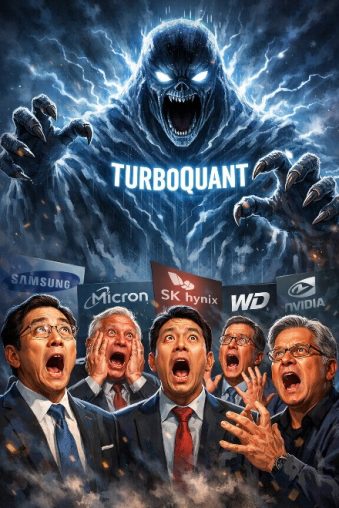
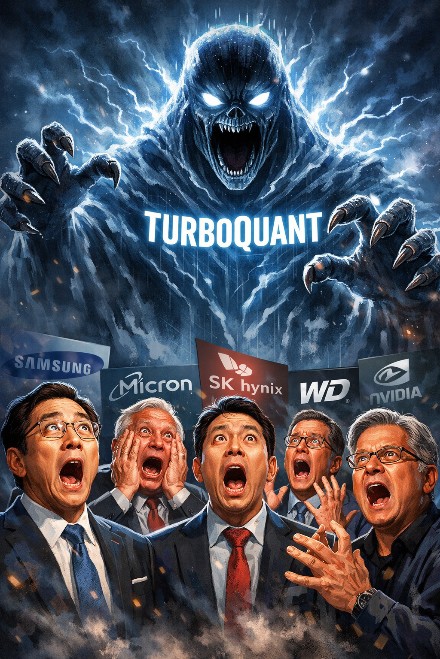
As this realization spread, major memory chip stocks dropped. Companies such as Micron Technology, Samsung Electronics, and SK Hynix saw significant declines. In addition, firms like Western Digital and SanDisk also fell as fear spread across the semiconductor sector.
The logic behind the sell-off seemed straightforward. If AI systems suddenly required less memory, companies might delay or reduce hardware purchases. Consequently, confidence in future demand weakened.
⚖️ The Micron Perspective: A Double-Edged Sword
At the same time, this development placed additional pressure on Micron. The company had already committed heavily to expanding production, expecting strong AI-driven demand.
On one hand, TurboQuant raises valid concerns. If hyperscalers operate more efficiently using existing infrastructure, they may reduce near-term orders for new memory chips. This situation could create oversupply and pressure pricing and margins.
On the other hand, the situation appears more complex than it initially seems. Many analysts point out that efficiency often increases usage rather than reducing it.
As AI becomes cheaper and faster to operate, more companies can adopt it. Applications that once seemed too expensive suddenly become viable. As a result, overall demand for AI infrastructure may increase over time.
In this context, TurboQuant acts less like a disruptor and more like an accelerator. Instead of shrinking the market, it expands it by making AI accessible to a wider audience.
🧠 Impact on the Memory Leaders
Meanwhile, the major memory players face this shift in different ways.
Micron, as a more focused memory company, remains highly sensitive to demand cycles. Any disruption in demand can quickly create volatility in its stock performance.
SK Hynix, which leads in high-bandwidth memory for AI workloads, faces a different challenge. If efficiency reduces memory intensity, demand for premium products may slow in the short term.
In contrast, Samsung benefits from a diversified business model. Its exposure to multiple technology segments helps balance risk across different markets.
Despite these differences, all three companies share the same long-term challenge: they must adapt to a world where software optimization plays a larger role in shaping hardware demand.
📱 The Real Winner: On-Device AI
At the same time, a major opportunity is emerging outside data centers. TurboQuant could unlock the next wave of on-device AI.
Currently, smartphones and laptops struggle to run advanced AI models due to memory limitations. These devices simply lack the capacity required for modern models.
However, if TurboQuant significantly reduces memory needs, this barrier disappears. As a result, powerful AI features can run directly on consumer devices without relying on the cloud.
This shift could trigger a new upgrade cycle in consumer electronics. Companies like Apple and Samsung can integrate advanced AI into everyday devices, transforming user experiences.
Interestingly, this trend could benefit memory companies in the long run. Even if each device uses less memory, the total number of AI-enabled devices could grow significantly, increasing overall demand.
🤔 Should Investors Be Skeptical? Will Stocks Stay Down?
At this stage, an important question emerges: should investors remain cautious, or does the market overreact?
Initially, skepticism makes sense. TurboQuant introduces a real technological shift that directly reduces memory requirements. Because memory represents a critical cost component in AI infrastructure, this change creates uncertainty for companies that depend heavily on hardware demand.
In the short term, this uncertainty keeps pressure on memory stocks. Companies such as Micron Technology and SK Hynix may continue to experience volatility as investors reassess growth expectations. At the same time, hyperscalers may slow or delay new orders while they evaluate efficiency gains.
However, looking beyond the immediate reaction reveals a more balanced picture. Markets tend to react quickly to disruption, but they often take longer to account for second-order effects. While TurboQuant reduces memory usage per model, it also lowers the cost of deploying AI systems.
As a result, a powerful counterforce begins to develop. Lower costs make AI accessible to more companies, which drives broader adoption. New applications emerge, and existing use cases expand. Over time, the total number of AI systems could increase significantly, even if each system requires fewer resources.
In addition, TurboQuant mainly affects inference rather than training. Large-scale model training still requires substantial computational power and memory capacity. As companies continue building more advanced models, demand for high-performance memory remains relevant.
At the same time, new markets such as on-device AI and edge computing begin to open. These areas introduce additional demand streams that did not previously exist at scale.
Given these dynamics, memory stocks may remain volatile in the near term as valuations adjust. However, over the longer term, stronger adoption could stabilize and even expand demand.
Ultimately, the recent decline reflects uncertainty rather than a structural collapse. The key challenge for investors lies in separating short-term fear from long-term growth potential.
🔍 Is the Memory Boom Over?
In the short term, TurboQuant has disrupted the market narrative. It has forced investors to rethink assumptions about unlimited hardware demand and exposed the risks of over-optimism.
However, history points in a different direction. When technology becomes more efficient, usage tends to increase rather than decrease.
For example, when internet speeds improved, people did not use less data. Instead, entirely new industries emerged.
Similarly, TurboQuant could mark a turning point for AI. By lowering costs and improving performance, it enables broader adoption and new use cases.
Although short-term volatility may continue, long-term demand for memory infrastructure remains strong.
Ultimately, TurboQuant does not eliminate the need for memory chips. Instead, it reshapes how and where they get used. As AI becomes more efficient and widespread, every system will still rely on physical silicon to operate.