
 Written by
 The 2026 Market’s Big Story: The “Venezuela Rebound”
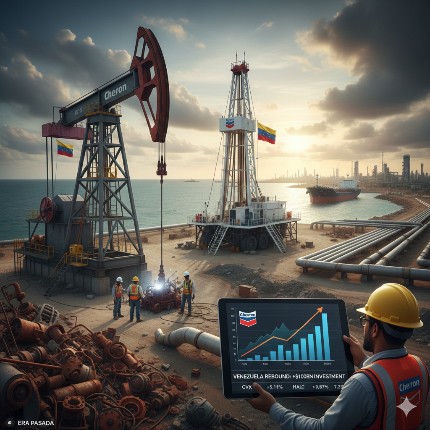
In early 2026, financial markets have been captivated by one headline: the Venezuela oil rebound and the potential reopening of Venezuela’s vast oil industry to U.S. companies. Venezuela holds some of the largest proven oil reserves in the world, yet decades of sanctions, mismanagement, and underinvestment had left its infrastructure in disrepair and production at only a fraction of its historic highs. With recent geopolitical developments, including U.S. efforts to engage with Venezuelan oil exports and expand access, investor attention has been drawn to the possibility that foreign companies will return, production will be rebuilt, and profits will be made from a previously inaccessible source of crude.

The “Gatekeeper”: Chevron (CVX)
Among the companies positioned to benefit from the Venezuela oil rebound, Chevron has been highlighted as the clear market favorite. Unlike its peers, Chevron was not completely forced out of Venezuela during long years of sanctions and decline; instead, it maintained a small presence under special U.S. licenses that allowed limited operations. Because of this, Chevron is uniquely positioned to scale up production faster than other companies, should cooperation between the U.S. and Venezuela advance, giving it a significant first‑mover advantage in the reopening of the country’s oil industry. This trend has been reflected in market news, where Yahoo Finance has noted Chevron’s defining role and its unique position as the only major U.S. oil company currently active in Venezuela.
In practical terms:
-
Chevron’s existing personnel and rigs allow operations to be restarted without rebuilding from scratch.
-
Stock performance has already been positively influenced as anticipation of expanded operations grows.
The “Repair Crew”: Halliburton (HAL) & SLB (SLB)
Meanwhile, Venezuela’s oil infrastructure — including wells, pipelines, and processing facilities — has been severely degraded over the years. Consequently, extensive rehabilitation and technical expertise are required before production can resume at meaningful levels. Companies such as Halliburton and SLB are expected to be heavily involved.
-
Well repair, drilling, reservoir mapping, and other rebuild contracts are being undertaken by these firms.
-
Payments are generally secured for the work itself, making these companies less exposed to fluctuations in crude prices.
As a result, investors have been increasingly attracted to these stocks as the rebuild cycle is expected to span multiple years and billions of dollars.
The “Heavy Crude Specialists”: Valero (VLO) & Marathon Petroleum (MPC)
Not all crude can be refined in the same way. Venezuelan oil is typically heavy and sour, meaning it is thicker and more difficult to process than the light, sweet crudes commonly produced elsewhere. Therefore, only certain U.S. Gulf Coast refineries — including those operated by Valero and Marathon Petroleum — are able to process this oil profitably.
-
By purchasing heavy Venezuelan crude at a lower cost, these refineries can convert it into fuel products that command higher margins.
-
Consequently, stock valuations for these refiners have been positively influenced by expectations of increased access to inexpensive feedstock.
The “Old-Score Settler”: ConocoPhillips (COP)
Years ago, Venezuela expropriated assets from ConocoPhillips without compensation. These claims, now amounting to billions, could potentially be resolved under a new political and legal framework. As a result, ConocoPhillips may receive compensation either through cash settlements or new drilling rights. In this context, the company has been considered an indirect beneficiary of the broader reopening narrative.
The Bottom Line
The “Venezuela Trade” is ultimately a story of rebuilding. While oil production itself is central, the primary beneficiaries are not limited to crude producers alone. Companies with existing access (Chevron), those providing tools and technical services (Halliburton, SLB), refiners capable of processing heavy crude (Valero, Marathon), and firms with legacy claims (ConocoPhillips) are all positioned to profit.
However, this is a long-term story rather than a short-term opportunity. Tens of billions of dollars and years of investment will likely be required before Venezuela’s oil production is fully restored.