
 Written by
 Why Is Nvidia Stock Going Down? Production Cuts and Market Pressures Explained
Nvidia Faces GPU Production Challenges
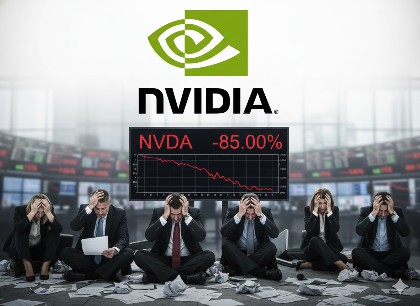
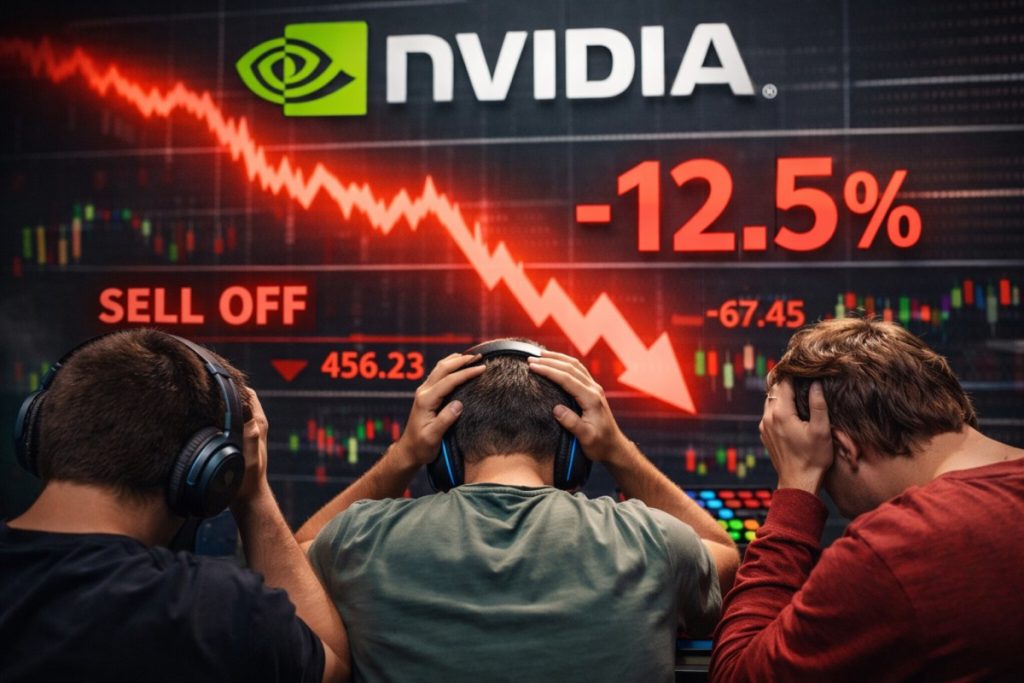
The question on many investors’ minds is why is Nvidia stock going down despite its dominant position in AI infrastructure. One major factor is the company’s planned reduction in GeForce RTX 50 series production by 30% to 40% in early 2026 compared with 2025 levels. A severe global shortage of GDDR7 memory modules, crucial for the new Blackwell architecture, is forcing Nvidia to scale back. The RTX 5070 Ti and RTX 5060 Ti (16GB) are expected to be the first models impacted, while the company reallocates limited memory toward data center (AI) and RTX PRO cards — a move emphasizing its focus on AI-driven growth.
Sector Volatility Adds Pressure
These production adjustments have heightened volatility in the AI sector. Investors are asking why is Nvidia stock going down even as the company continues to lead in GPUs and AI infrastructure. Supply chain constraints and production dynamics show that even top-tier tech firms are not immune to market recalibration.
Macro Conditions Affect Sentiment
Beyond Nvidia-specific factors, macroeconomic trends are also influencing investor behavior. Softening Dow futures, rising interest rates, and tighter liquidity are pressuring high-multiple growth stocks like Nvidia. As investors reassess risk, they are reallocating capital, which increases volatility across AI-related equities.
Alternative Semiconductor Options
Amid these shifts, alternative semiconductor plays are attracting attention. INTC stock, a legacy chipmaker with diversified offerings, offers investors semiconductor exposure without concentrated AI risk. This rotation demonstrates a broader trend of balancing high-growth, high-risk names with steadier, cash-generating companies.
The “Prove-It” Phase for AI
The AI market is entering a “prove-it” phase, where companies must demonstrate that infrastructure investments deliver sustainable earnings. For investors, this highlights the importance of portfolio diversification. Balancing AI exposure with sectors like industrials, healthcare, energy, or defense can provide steadier returns while still capturing technology-driven growth.
Strategic Takeaways
In conclusion, why is Nvidia stock going down can be traced to production cuts, memory shortages, macro pressures, and sector rotation. While Nvidia GPU production has been the engine behind its trillion-dollar trajectory, the current slowdown, macro trends, and sector rotation underscore the value of measured portfolio positioning. Investors who combine growth opportunities with stability may be better equipped to navigate this period of heightened volatility and capitalize on long-term AI growth.