
 Written by
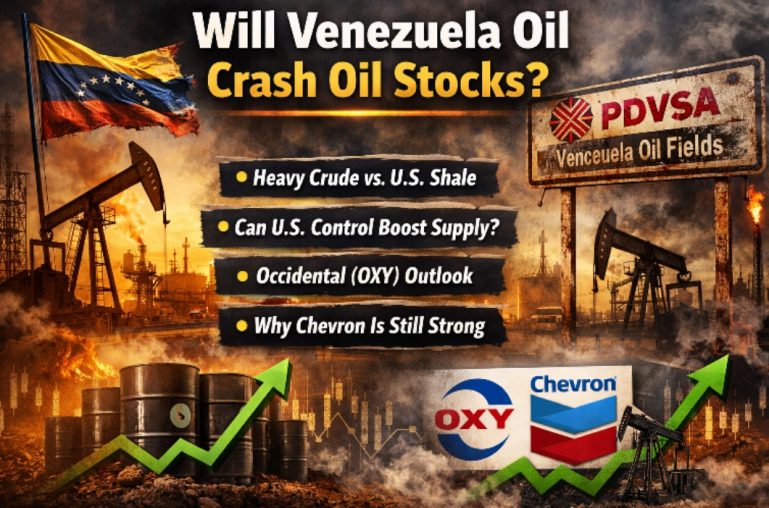
 Will Venezuela Oil Crash Oil Stocks?
Whenever Venezuela appears in the news, oil stock investors get nervous. The fear is simple: if Venezuelan oil suddenly returns to global markets, supply could surge and oil stocks could fall. However, this concern overlooks how oil markets actually work and why Venezuela’s situation is far more limited than headlines suggest. Most of Venezuela’s crude is heavy and sour, requiring specialized refineries, while U.S. shale and other light crude dominate the fuels that power global demand. This mismatch means Venezuelan production cannot directly displace U.S. oil, limiting its impact on prices and protecting oil stock values.
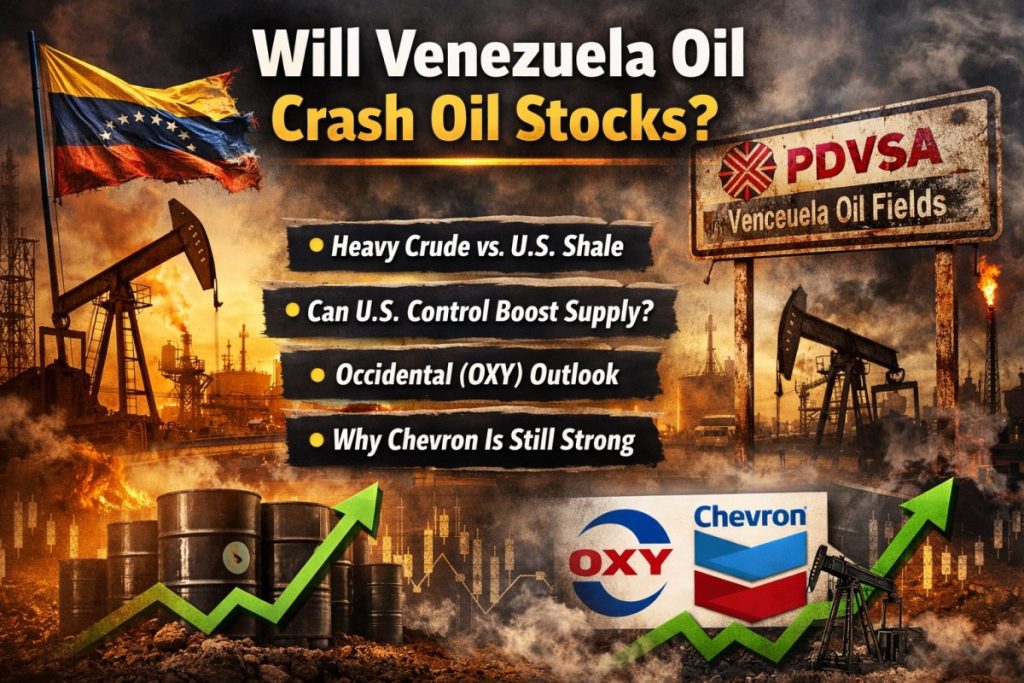
Why Venezuela’s Oil Comeback Won’t Sink Oil Stocks
Venezuela holds huge oil reserves, but production is constrained by years of underinvestment, damaged infrastructure, and labor shortages. Even if political conditions improve, oil output cannot ramp up quickly. Any meaningful recovery would take years, not months. This slow timeline prevents Venezuelan oil from overwhelming global supply or crashing oil stocks.
Cultural & Viral Trends Influencing Market Sentiment
Investor sentiment is influenced not just by oil production and refineries, but also by current events and cultural narratives. The recent attention on jack ryan venezuela episode and tom clancy’s jack ryan venezuela shows how the show’s depiction of Venezuela resonates with real-world developments. These conversations illustrate that oil market perception is shaped not only by supply and demand fundamentals but also by the stories people are engaging with across media.
Do U.S.-Controlled Venezuela Oil Fields Threaten Oil Stocks?
Some investors worry that increased U.S. involvement could unlock Venezuelan oil overnight. In reality, foreign participation does not fix broken pipelines, outdated refineries, or depleted equipment. Oil fields require massive capital and skilled labor to restart. As a result, U.S. influence does not equal an immediate supply flood, easing pressure on oil stocks.
Heavy Crude vs U.S. Shale: What Oil Stock Investors Miss
A key reason Venezuela oil does not crush oil stocks is quality. Venezuelan oil is mostly heavy crude, which is thick and costly to refine. U.S. shale oil, produced by companies like Occidental, is light and easier to process. Refineries are built for specific oil types, so heavy crude cannot easily replace U.S. shale in the market.
Why Venezuela Oil Can’t Replace U.S. Shale Oil Stocks
Venezuelan oil cannot directly replace U.S. shale because the two serve fundamentally different parts of the global refining system. Venezuelan crude is extremely heavy and high in sulfur, while U.S. shale produces light, sweet crude. Refineries are engineered for specific oil types, and most U.S. shale barrels flow into refineries optimized for lighter blends. This technical mismatch limits direct competition. Even if Venezuelan oil returns to global markets, it cannot flood the same buyers that depend on shale supply. Light crude remains essential for producing gasoline and petrochemical feedstocks efficiently, keeping demand for U.S. shale structurally strong.
What This Means for Occidental (OXY) Oil Stock
Occidental mainly produces light U.S. shale oil, keeping it insulated from Venezuelan supply risks. While headlines may cause short-term volatility, OXY’s long-term fundamentals remain supported by tight global supply and steady demand.
Why Chevron Oil Stock Is Built to Handle Heavy Crude
Chevron’s strength lies in its fully integrated business model, which gives the company a major advantage when dealing with heavy crude oil. Unlike many competitors, Chevron owns and operates refineries specifically designed to process heavier and more complex oil grades.
Heavy crude typically trades at a discount because it requires more advanced refining. Chevron turns this challenge into an opportunity. Its refineries can efficiently convert discounted heavy crude into high-value fuels such as gasoline, diesel, and jet fuel, boosting refining margins when market conditions tighten.
Bottom Line: Why Oil Stocks Stay Strong Despite Venezuela Headlines
Investor attention continues to move toward U.S. oil companies as markets look for reliable cash flows. These energy companies are seen as steady operators with clear reporting, shareholder-friendly returns, and the ability to perform well across price cycles. This focus supports their stock values and keeps confidence strong, even when geopolitical news creates short-term uncertainty. At the same time, awareness of Canada oil reserves shows that North America has a stable supply, adding another layer of confidence for long-term energy security. Countries with the largest oil reserves further underscore the global importance of strategic supply, reinforcing why high-quality oil stocks remain attractive.
For investors wondering will oil stocks go up, the answer lies in fundamentals: Venezuela adds uncertainty, not oversupply. Heavy crude limits, slow recovery, and refinery constraints all help oil stocks stay resilient. Strong companies like Exxonmobil, OXY, Chevron, and Halliburton stock remain well positioned despite geopolitical noise.