
 Written by
 Anduril EagleEye Helmet Explained: AI-Powered Military Headset by Palmer Luckey
Introduction: A New Era in Military Technology
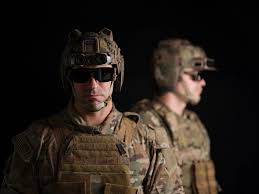
As modern defense systems evolve, artificial intelligence, real-time data, and immersive displays are reshaping how soldiers perceive their surroundings. Leading this transformation is the Anduril EagleEye Helmet, an AI-enhanced, mixed-reality battlefield headset developed by Anduril Industries under the leadership of Palmer Luckey, the hardware visionary known for creating Oculus VR. EagleEye isn’t just another piece of gear; it represents a leap toward AI-augmented situational awareness and battlefield command embedded directly in a warfighter’s helmet system.
Since its unveiling in late 2025, EagleEye has attracted attention not only within defense circles but across the broader technology community. Its promise to blend data, autonomy, and human decision-making places it at the forefront of next-generation combat wearables.
What Is the EagleEye Helmet?
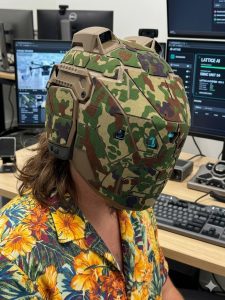
At its core, EagleEye is a mixed-reality battlefield interface designed to deliver mission-critical data directly into a soldier’s field of view. Rather than serving solely as head protection, this system functions as an AI-driven command node, combining visual overlays, sensor fusion, and audio cues so that operators can make faster, better-informed decisions.
Unlike standard military headsets of the past, EagleEye integrates augmented reality (AR), virtual reality (VR), and mixed-reality (MR) technologies into a modular platform. In practical terms, this means soldiers could see real-time maps, location markers, teammate positions, and identified threats without taking their eyes off the surroundings.
Multiple form factors are in development — from lightweight AR glasses to a full-face ballistic shield variant — allowing EagleEye’s capabilities to be tailored for different mission roles and environmental conditions.
How EagleEye Works: Core Technologies
AI and Real-Time Data Integration
EagleEye’s intelligence backbone is its AI system, which aggregates vast amounts of battlefield data — from sensors, drones, and allied units — and filters it into concise, meaningful displays. This real-time processing helps reduce cognitive load, allowing soldiers to stay focused on immediate threats and plan next steps more effectively.
Anduril’s command platform underpins this capability, connecting EagleEye to a broader network of autonomous systems, ground units, and mission planners. By fusing data from multiple sources into a unified operational picture, it turns raw information into actionable battlefield insights.
Augmented Reality Overlays
With its AR and MR technology, EagleEye projects critical overlays directly into the user’s view. These can include:
- Position of friendly units
- Navigation waypoints
- Real-time threat indicators
- Mission objectives
By integrating these digital layers into real environments, soldiers don’t need to check separate devices — everything is accessible without shifting focus from the battlefield.
Sensor Fusion and Spatial Awareness
EagleEye synthesizes information from distributed sensors such as drones, ground radars, and reconnaissance systems. This fusion creates a holistic and dynamic battlefield map in real time. Spatial audio adds an additional dimension, giving directional cues about threats, movement, or activity that might be outside a soldier’s visual range.
For example, audio alerts might indicate an approaching vehicle or a nearby ally calling for assistance — all while still displaying visual cues within the helmet’s HUD.
Partnerships and Industry Support
A defining feature of EagleEye is the degree of commercial tech collaboration it incorporates. Anduril has partnered with major tech firms to bring advanced optics, waveguide displays, compute platforms, and helmet integration to the system.
This collaboration brings decades of AR, VR, and mobile hardware expertise into a military context — a notable shift from traditional defense procurement, which often relied solely on legacy defense contractors.
For example, waveguide and display technologies provide high-resolution visuals while maintaining the lightweight design necessary for warfighter comfort.
Integration with Soldier Borne Mission Command
EagleEye is set to play a central role in the U.S. Army’s Soldier Borne Mission Command (SBMC) program — the successor to earlier mixed-reality projects like the Integrated Visual Augmentation System (IVAS). Under this initiative, Anduril and other partners are delivering hundreds of prototype headsets to evaluate performance in real training and operational environments.
Initial plans involve delivering roughly 100 EagleEye units to Army personnel for field testing, with expected trials in 2026. These tests will evaluate ergonomics, interface usability, reliability, and how well EagleEye enhances decision-making under realistic conditions.
Strategic Significance Beyond Technology
EagleEye’s development speaks to larger shifts in defense technology adoption. First, it highlights how commercial-grade AR and AI technologies are being adapted for military use, speeding up innovation compared with traditional defense procurement cycles.
Second, by building a family of devices from glasses to ballistic helmets, Anduril is positioning EagleEye as a scalable, flexible platform rather than a single product — a strategy that encourages iterative improvement and minimizes hardware obsolescence.
Finally, EagleEye reflects a broader move toward networked soldier systems that enhance both individual and unit capabilities. Soldiers equipped with EagleEye aren’t just connected to their immediate teams but to a larger autonomous ecosystem, including drones and tactical networks.
Potential Civilian and Global Defense Applications
While EagleEye was designed for military environments, its underlying technologies — such as real-time AR overlays and AI decision support — could benefit non-combat applications in the future. These might include:
- Border security monitoring
- Search and rescue operations
- Emergency response coordination
- Critical infrastructure protection
Although military systems often remain classified, commercial adaptations of similar technology could eventually appear in law enforcement or civilian safety sectors.
Ethical and Operational Considerations
As with all AI-enabled defense technologies, EagleEye raises important ethical questions about autonomy, human control, and battlefield decision-making. Anduril emphasizes that EagleEye is intended to support — not replace — human judgment, ensuring soldiers remain “in the loop” during critical decisions.
Aligning AI with ethical use cases in defense is an ongoing conversation among military planners, policymakers, and technologists — especially as wearable systems become increasingly intelligent and connected.
A Glimpse Into the Future of Warfare
The Anduril EagleEye helmet represents a major evolution in how wearable technology supports soldiers in the field. By combining AI, mixed reality, sensor fusion, and intuitive interfaces, it has the potential to redefine situational awareness and unit effectiveness on the modern battlefield.
As field evaluations continue and partner support grows, EagleEye stands out as a symbol of the next generation of military wearables — a product that blends commercial innovation with battlefield practicality. For defense analysts, technologists, and anyone watching how AI shapes national security, EagleEye offers a compelling look at the future of integrated warfighter systems.